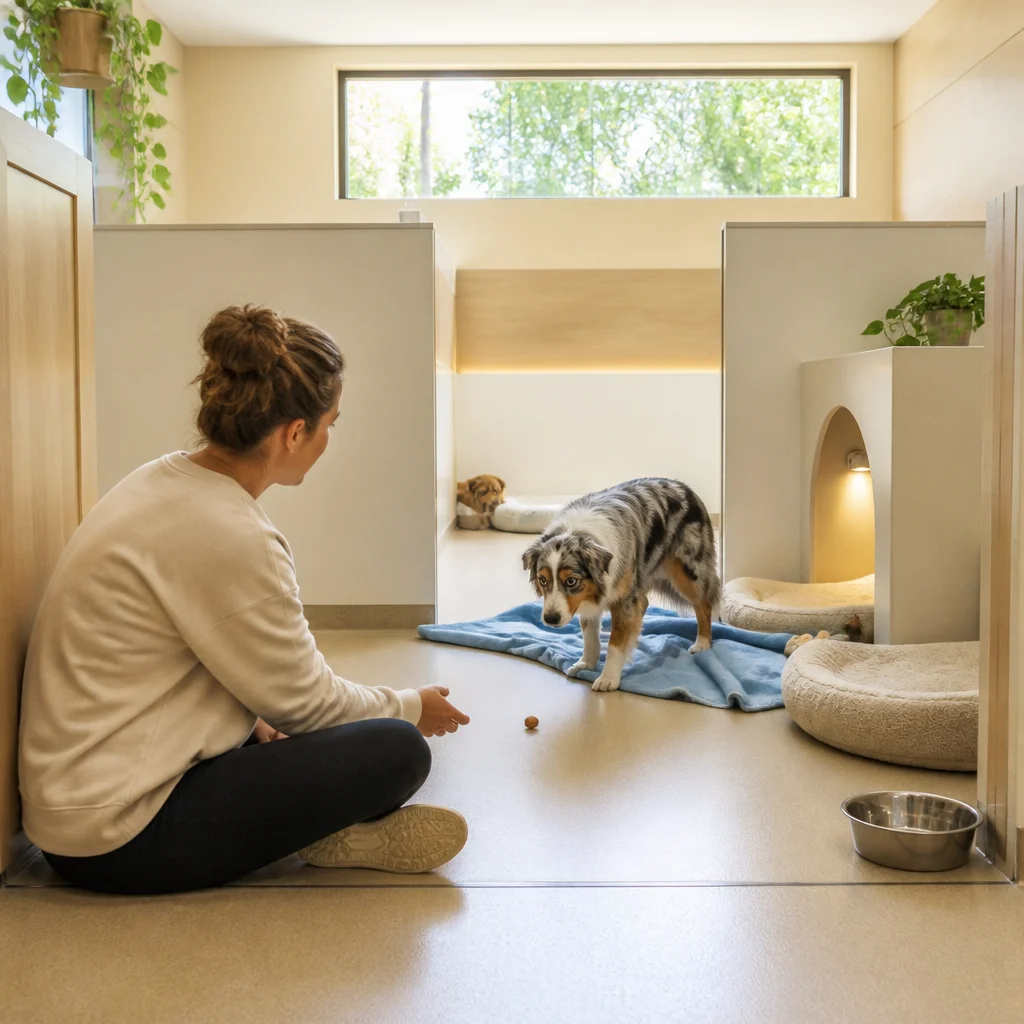
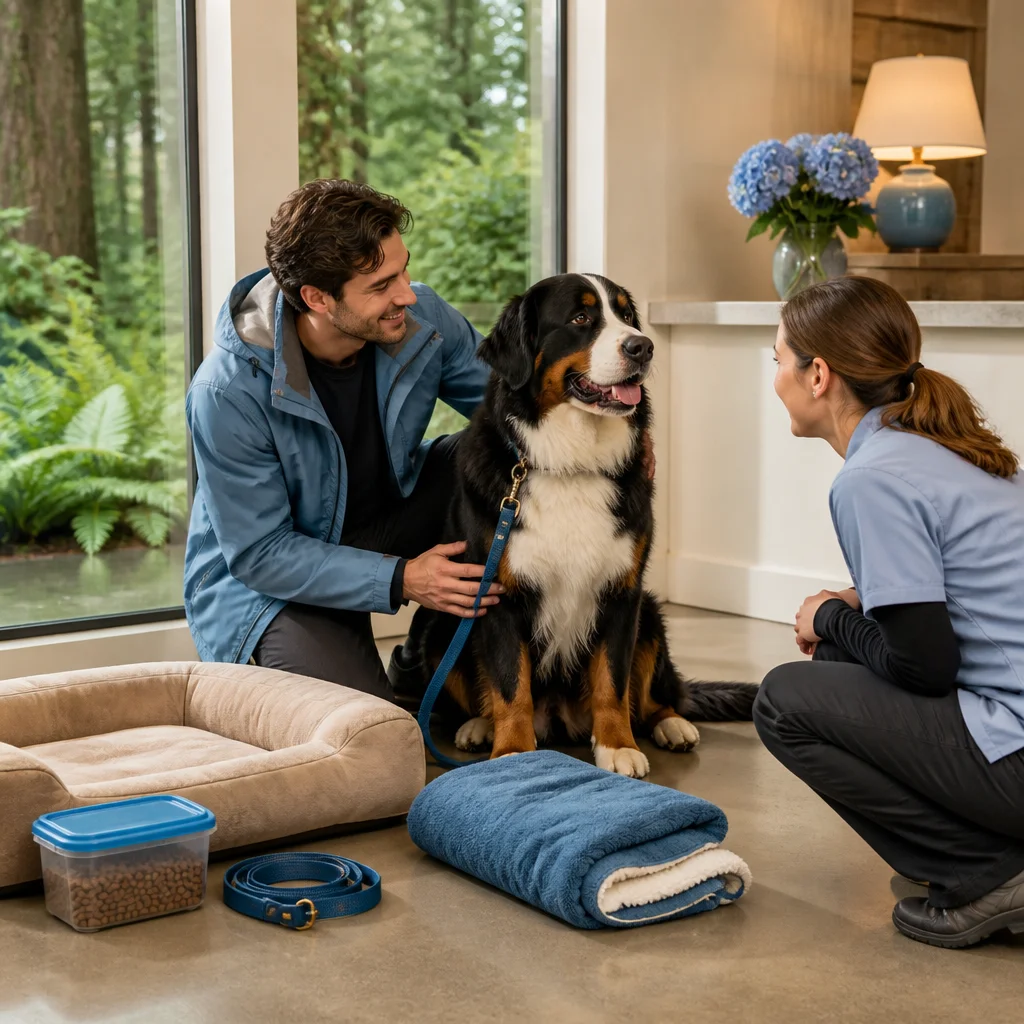
A useful boarding checklist follows the booking from two weeks out to the ride home. It keeps one missing record, vague pickup time or old feeding note from becoming a travel-day problem.
As soon as dates are possible
- Get the street address and accepted arrival and pickup windows.
- Learn what makes the reservation firm: forms, assessment, deposit or full payment.
- Read the cancellation and late-return terms.
- Name a local contact who can make decisions and collect the dog.
- Ask what records the provider needs and when they must arrive.
Pack information before objects
The most valuable item is a short, current care sheet. Put the dog’s name, your contact, the backup contact and veterinary clinic at the top. Follow with measured meal instructions, usual toilet pattern, handling sensitivities, known escape risks, cues the dog understands and the circumstances that should trigger a call. If medication is involved, use the provider’s process and written veterinary directions. Do not place a new dose or treatment decision on boarding staff.
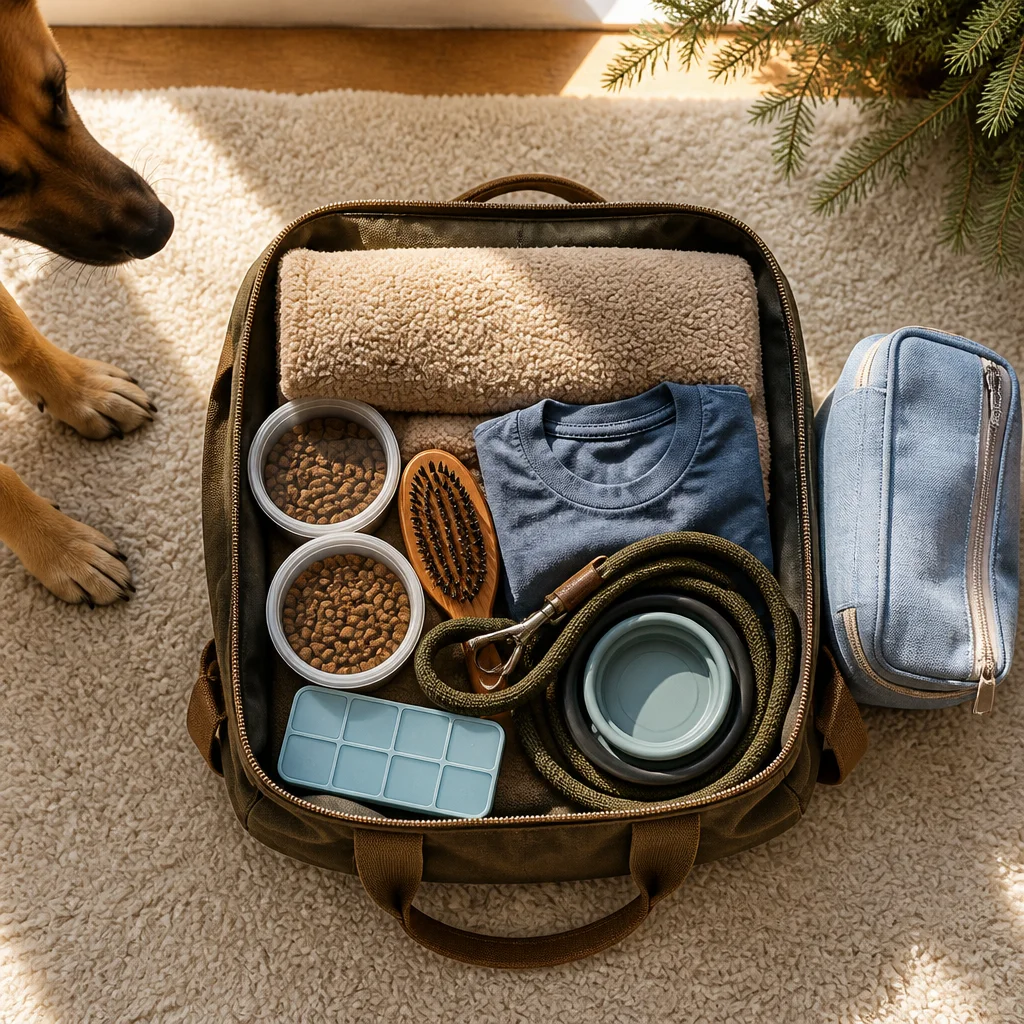
Then pack only what the provider accepts. Some businesses supply bowls or bedding; others ask for them. Confirm whether toys, chews, harnesses and crates are allowed, and label every accepted item. Portioning food by meal can reduce ambiguity, but ask first because storage systems differ.
Forty-eight hours before: verify the address, arrival window, balance owing, authorized pickup names and emergency contacts. Check that forms and records were received rather than merely sent.
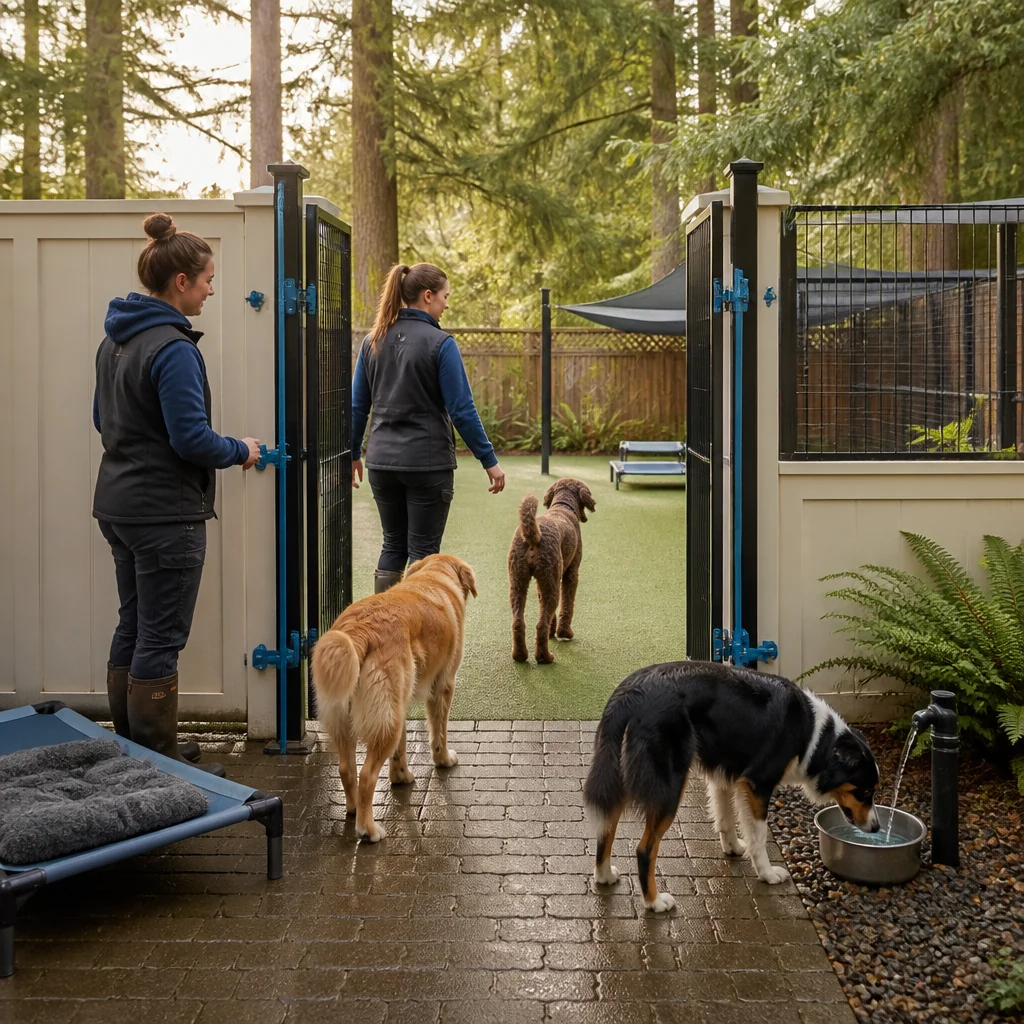
At the door: state any change since intake, count the belongings together, and repeat the one instruction that matters most. Keep the goodbye calm enough for staff to begin their routine.
At pickup: ask for specific observations. “Did he eat both meals, settle overnight, toilet normally and accept handling?” produces more useful information than “Was he good?” Save the answers with your checklist so the next stay starts from evidence.
Keep the return flexible
Travel delays and changed pickup people are common enough to plan. Give the backup person the provider’s address, hours and identification requirements, and confirm that the provider has approved them. Do not assume forwarding an email grants pickup authority. Keep a small reserve of the dog’s food with the provider if requested, and know whether an extra night is possible or would require another care plan.
A final five-minute check
Before leaving, compare the labelled food quantity with the booked nights, photograph the care sheet for your own record, and put the provider’s urgent number in both travellers’ phones. At reception, mention anything that changed that morning. Do not slip a new instruction into the bag without telling staff. At pickup, collect the written report and every item before the dog reaches the car; a missing medication container or harness is easier to resolve at the desk.