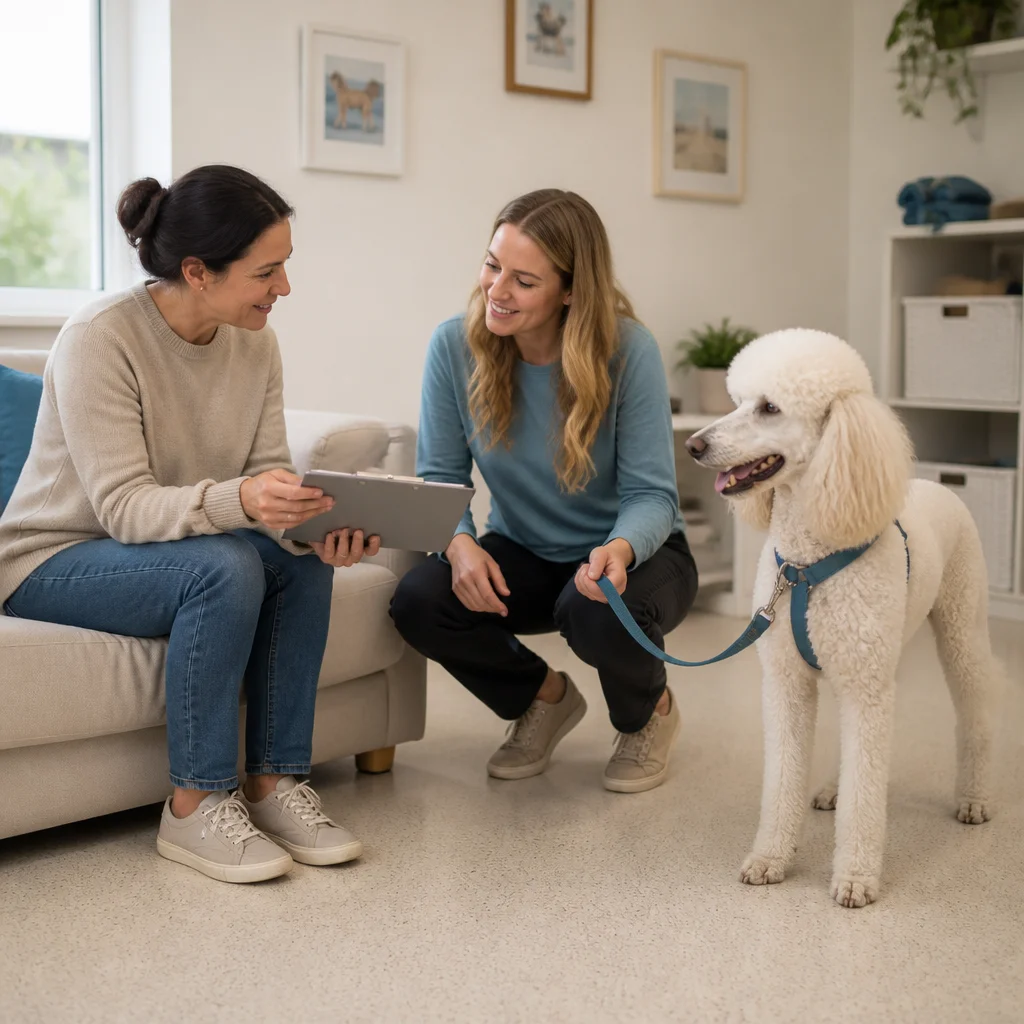
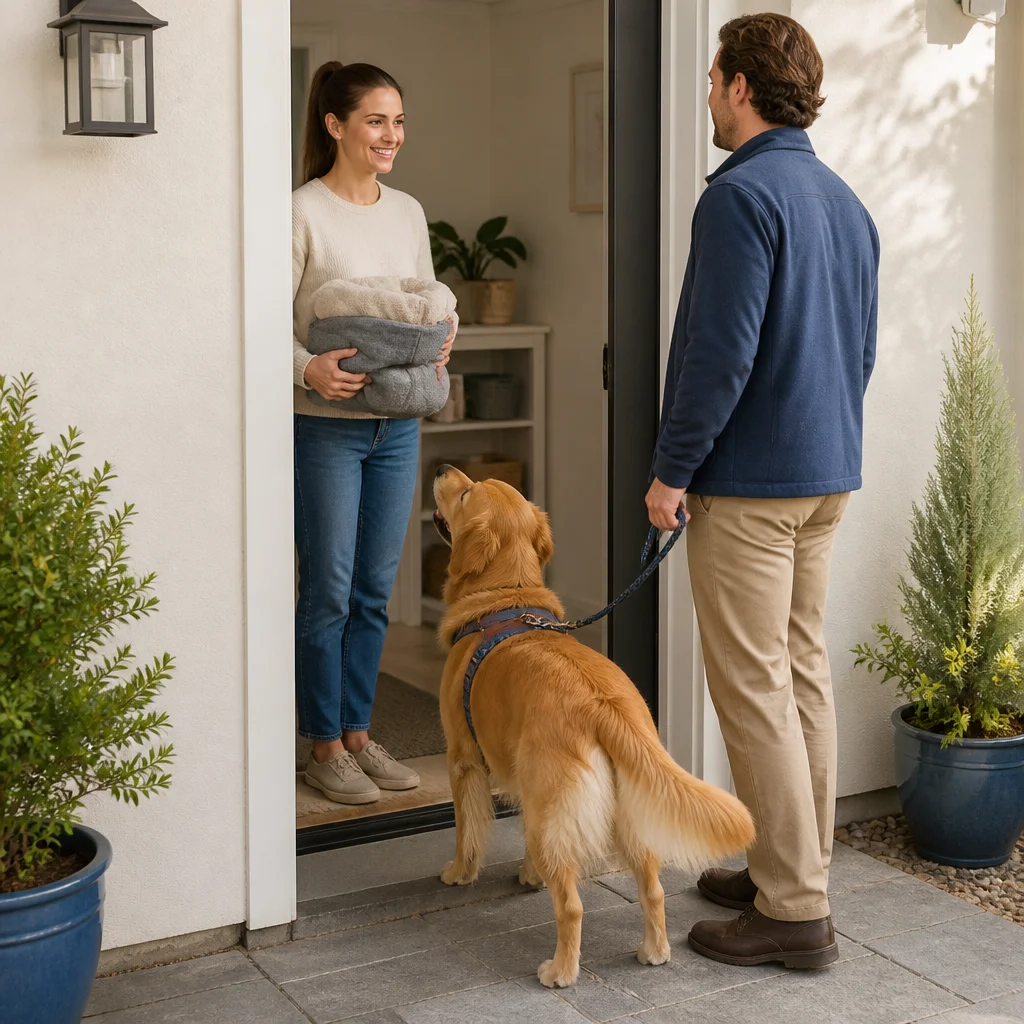
The right boarding setup is the one that can carry out your dog’s ordinary routine, respond when the dog is uncomfortable, and still work with your travel plans. Start with your dog’s needs and one realistic stay. Then ask each provider to explain how that stay would unfold.
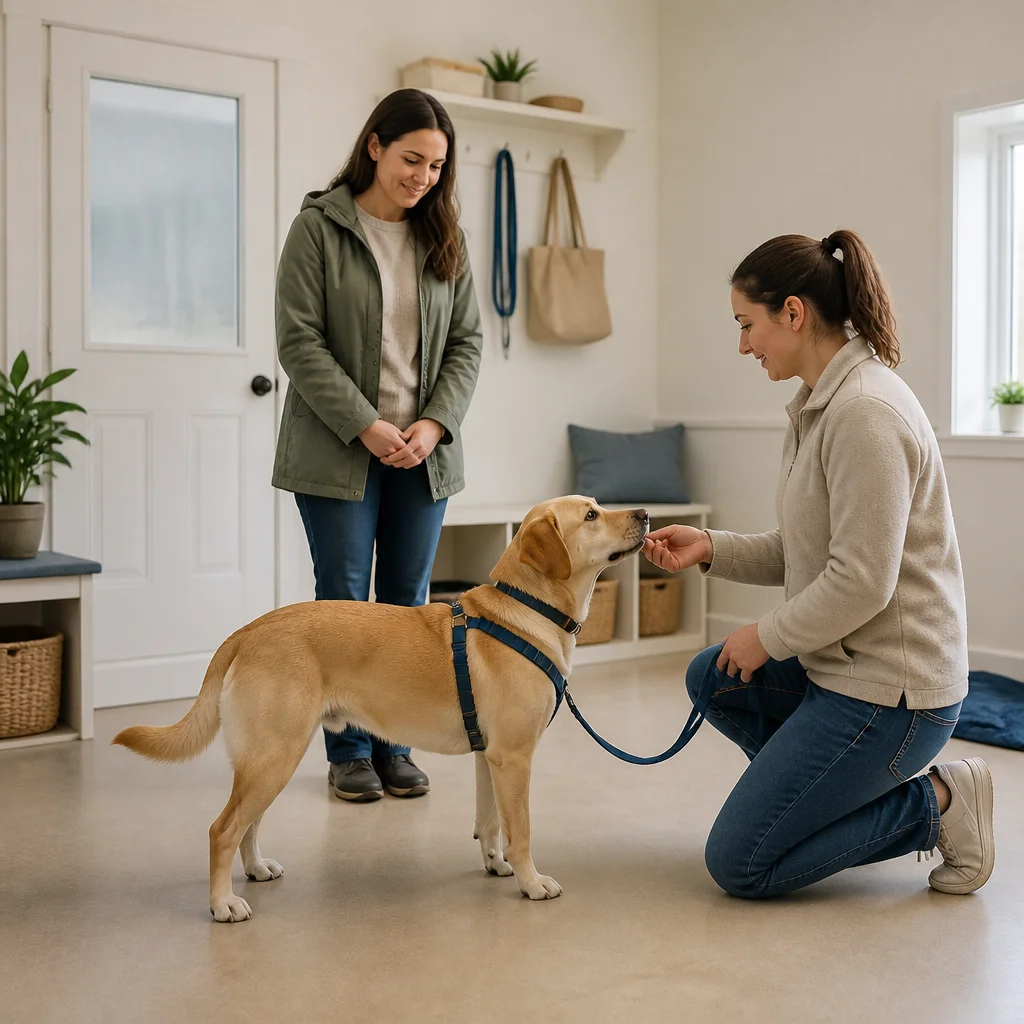
Write a short care brief first
Before looking at facilities, describe the booking in five or six useful lines. Include the dates and handoff times, where your dog normally sleeps, comfort around unfamiliar dogs and people, feeding routine, handling sensitivities, and any reason staff might need to call you. Mention escape attempts, guarding or difficulty settling accurately. A provider can only judge fit from the information it receives.
Decide which points are essential and which are preferences. Individual sleeping space may be essential for a dog that cannot rest around others. A photo every afternoon may simply be nice to have. This distinction helps when no candidate offers every feature.
Ask for the dog’s actual day
Give each provider the same scenario: “Juniper arrives Friday at 5 p.m., eats at 6:30, avoids crowded dog groups and is collected Monday morning. Please walk me through her first evening, overnight and next morning.”
Listen for people, places and decisions. Who receives the dog? Where does she settle? How are meals, toileting, exercise and rest recorded? Who is on site overnight, and what does overnight monitoring mean there? What happens if she will not eat or cannot settle in the planned space?
The BC SPCA AnimalKind pet-care guidance says pet-care services are unregulated in British Columbia and offers voluntary questions for comparing them. For boarding, it suggests asking about dogs per caregiver, sleeping space, daily exercise and social interaction, welfare checks, responses to stress and overnight monitoring. These prompts are useful during a visit; they do not prove that a particular business meets the voluntary standards.
Match the setting to the dog
A dedicated facility may have several staff members, purpose-built spaces and shift handoffs. A home-based arrangement may have a domestic rhythm, resident animals, household visitors and times when the caregiver leaves. Neither label tells you enough by itself.
Ask whether dogs are cared for individually or in groups, and how staff decide. A sociable dog still needs a place to rest away from activity. A dog that avoids unfamiliar dogs needs separation through doors, corridors and exercise areas, not just a promise of a private sleeping room. If crates are used, ask when, for how long and what happens if your dog is not comfortable in one.
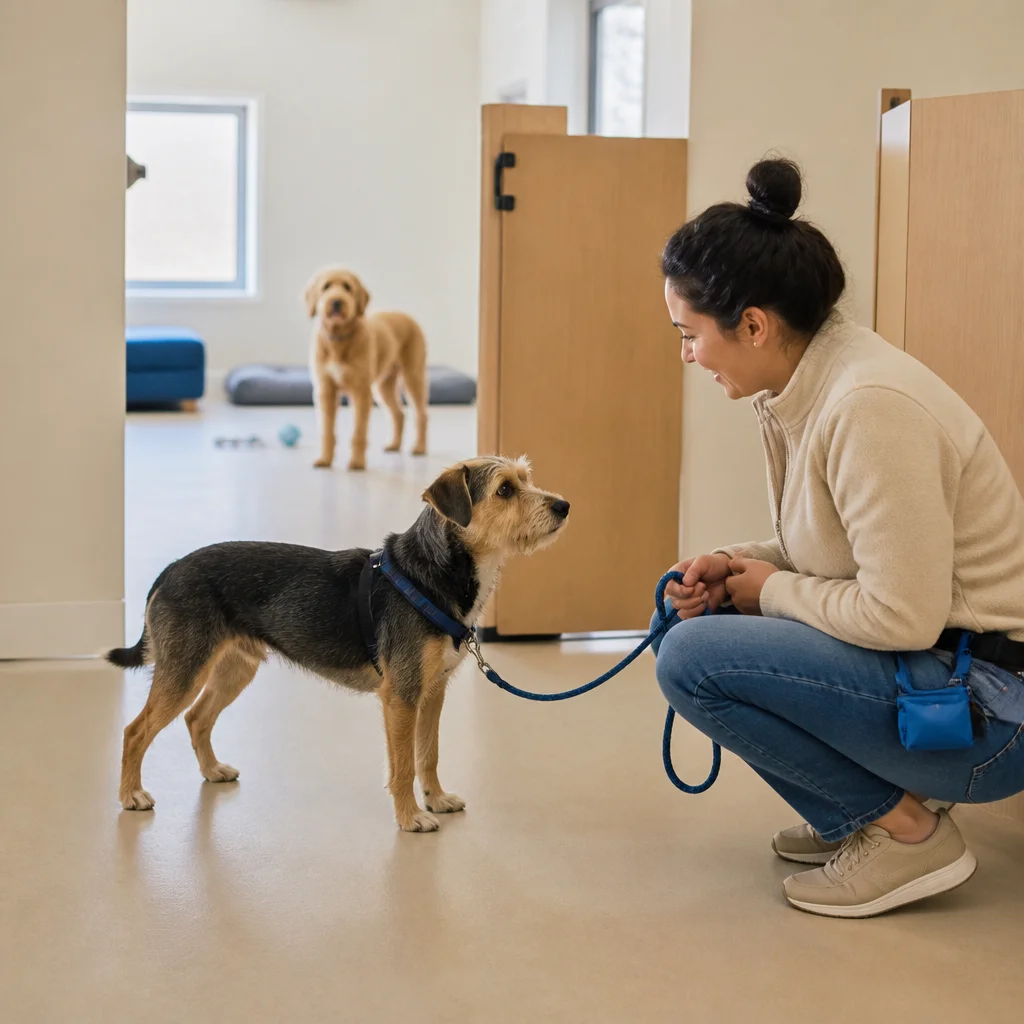
Watch transitions during a visit. Notice how gates are managed, how staff respond to barking, whether resting dogs are left alone, and whether an arriving dog is pushed into contact. Record what you observed separately from claims such as “luxury,” “home-like” or “24-hour care.”
Test the plan when something changes
An ideal-day tour is not enough. Ask what happens if your dog cannot join the planned group, the assigned caregiver is unavailable, your flight is delayed, or the dog needs to leave early. Who calls you? Where can the dog wait safely? Who can collect the dog if you are unreachable? How would veterinary transport be handled?
A provider that names its limits can be easier to trust than one that says every dog fits. Ask directly: “What kind of dog or stay are you not set up for?” Then ask what could cause staff to modify or end an accepted stay.
Check the Vancouver logistics
Confirm the street address. A business serving Vancouver may operate elsewhere in Metro Vancouver. Test the route at the expected drop-off and pickup times, including parking, bridge traffic, the provider’s arrival window and the time needed for a proper handoff. If someone else may collect your dog, confirm the business’s authorization and identification process before departure.
If off-site outings are included, ask where they normally occur, whether dogs are transported, how they are secured and how groups are controlled. The City of Vancouver says dogs must be leashed in parks unless they are in a designated off-leash area; designated sites vary in hours, fencing, surfaces and restrictions. A nearby park does not establish a provider’s outing plan.
Choose from complete offers
For each finalist, write down sleeping arrangement, caregiver responsibility, group plan, quiet space, overnight monitoring, emergency handoff, update policy, total price and change terms. Mark any vague answer as unresolved. Do not translate it into the answer you hoped to hear.
Reject an option with an important safety or emergency gap. Among the sound plans, choose the one that requires the fewest special workarounds for your dog and your trip. Confirm any nonstandard agreement in writing before paying. You can start with the boarding directory and providers serving Vancouver, but the final decision should rest on the specific care plan you have actually checked.