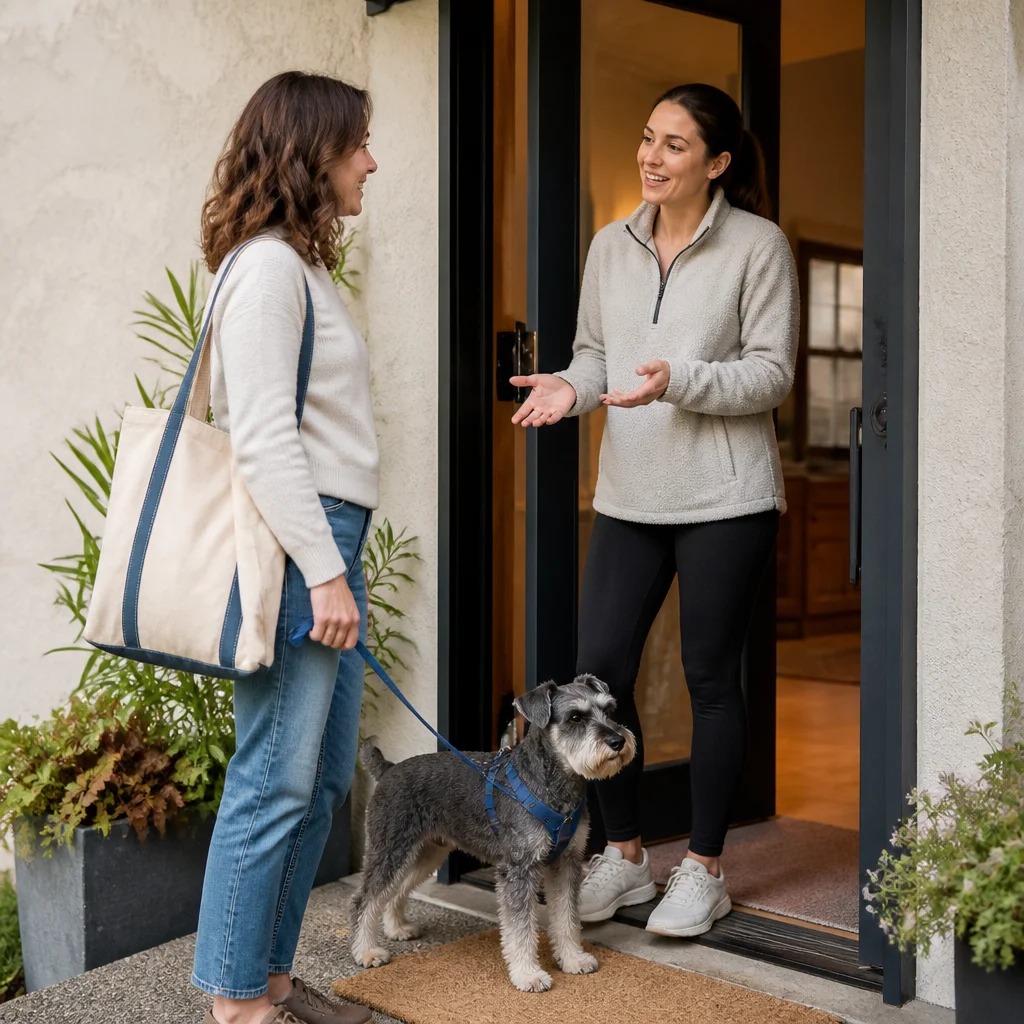
Boarding usually begins before drop-off. The provider first decides whether the dog and the proposed stay fit its space, staff and routine. Only after intake, required records and payment are complete should you treat the dates as secure.
Before arrival
Expect questions about feeding, sleep, handling, behaviour around dogs and people, health information and emergency contacts. Answer with recent examples. If the provider requires a meeting or trial, find out what it will observe and what outcomes are possible.
The AnimalKind boarding checklist offers voluntary questions about caregiver numbers, sleeping space, exercise, welfare checks, stress and overnight monitoring. Use them to understand this provider’s routine, not as a substitute for seeing the actual space.
The handoff
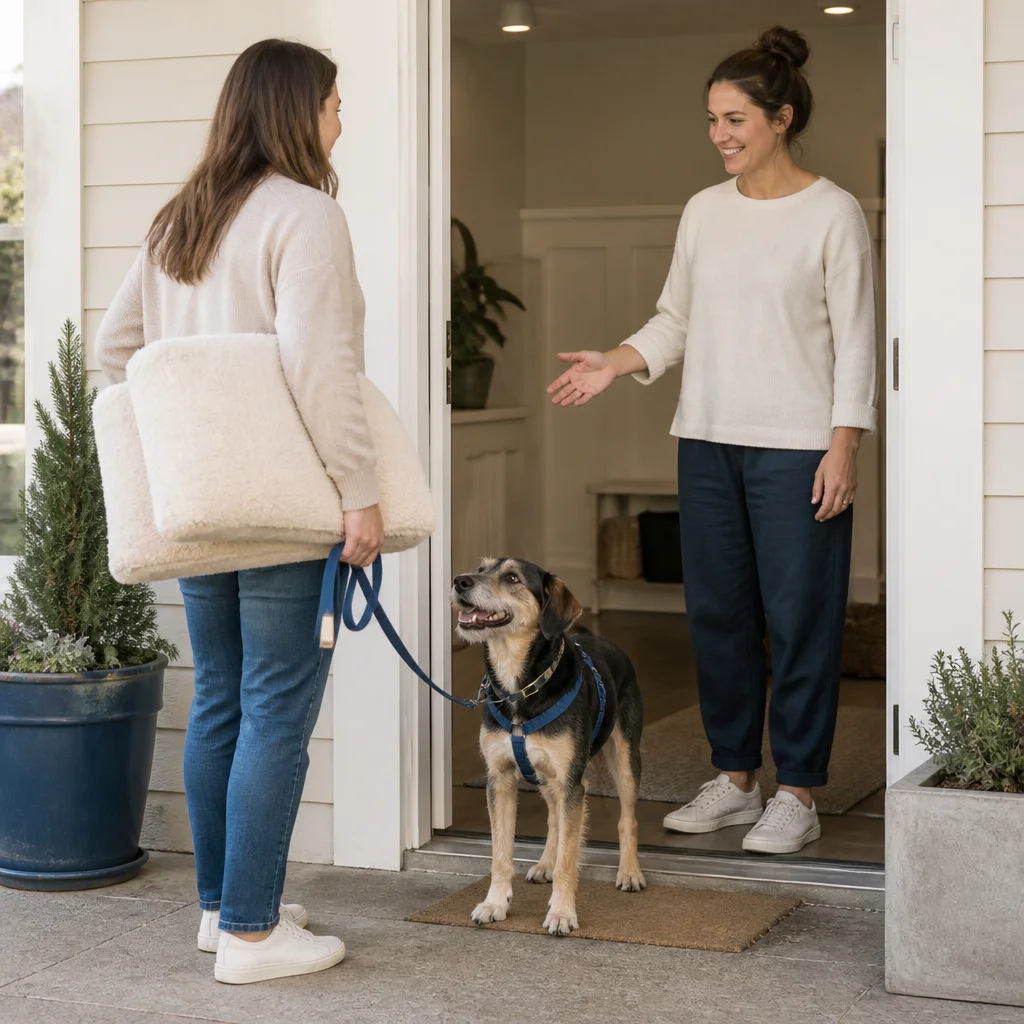
Staff should identify the dog, review changes, receive labelled belongings and know who can make decisions. A calm transfer may be brief. Save long goodbyes for home and make sure the essential instruction is written.
During the stay, updates may follow a set schedule. Agree beforehand on which events cause an immediate call. Keep the owner and backup contact reachable, because a provider may need early pickup even when the original return is days away.
What the first 24 hours may reveal
Arrival is a transition, not proof of how the whole stay will go. Staff may first secure belongings, confirm instructions and move the dog to a quiet area before introducing activities. Ask how introductions are paced and what staff do if the dog does not want to participate. A provider should be able to offer rest or separation without framing every reluctance as disobedience.
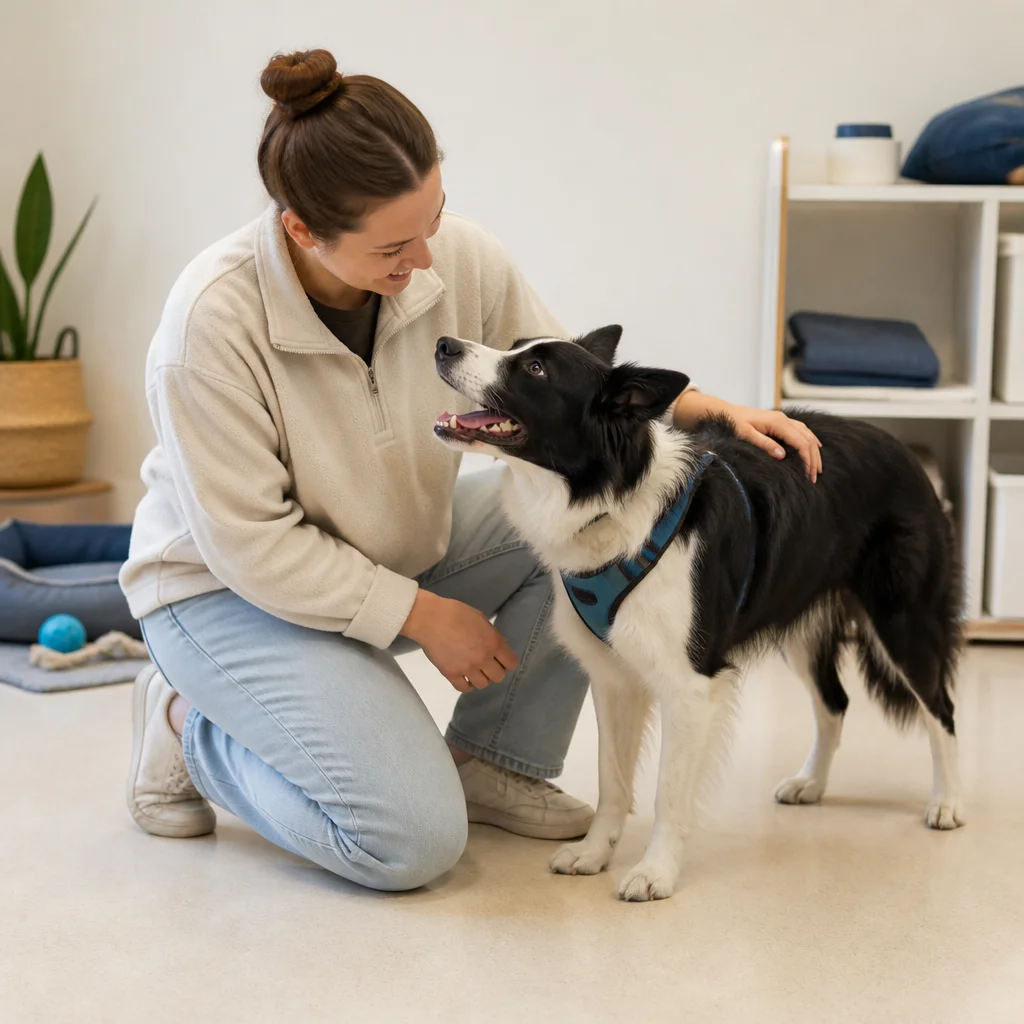
The first meal and overnight period can produce useful observations. Decide in advance which changes warrant an immediate call and which can appear in the routine update. For example, you may want prompt contact about an injury, escape, repeated vomiting or a major deviation from the agreed care, while a minor appetite change may be reported according to the provider’s policy. The provider is reporting and acting within its role, not diagnosing a condition.
Updates should match what was promised. If there is no photo at the usual time, use the agreed contact method rather than sending repeated messages to multiple staff. If plans change while you are away, make sure one authorized person can decide and reach the veterinary clinic.
After pickup, compare the report with your dog’s condition and belongings. Note what should change next time: a shorter stay, different food packaging, a quieter arrival time, or a provider with another care format. A first stay can be successful while still identifying adjustments.
Prepare the pickup person
Anyone collecting the dog should know the questions you want answered and be able to receive belongings, written reports and incident information. Give them authority in advance and ask them not to rush the handoff. If the dog needs veterinary attention or a changed routine after the stay, the owner should receive the provider’s exact observations rather than a shortened second-hand version.