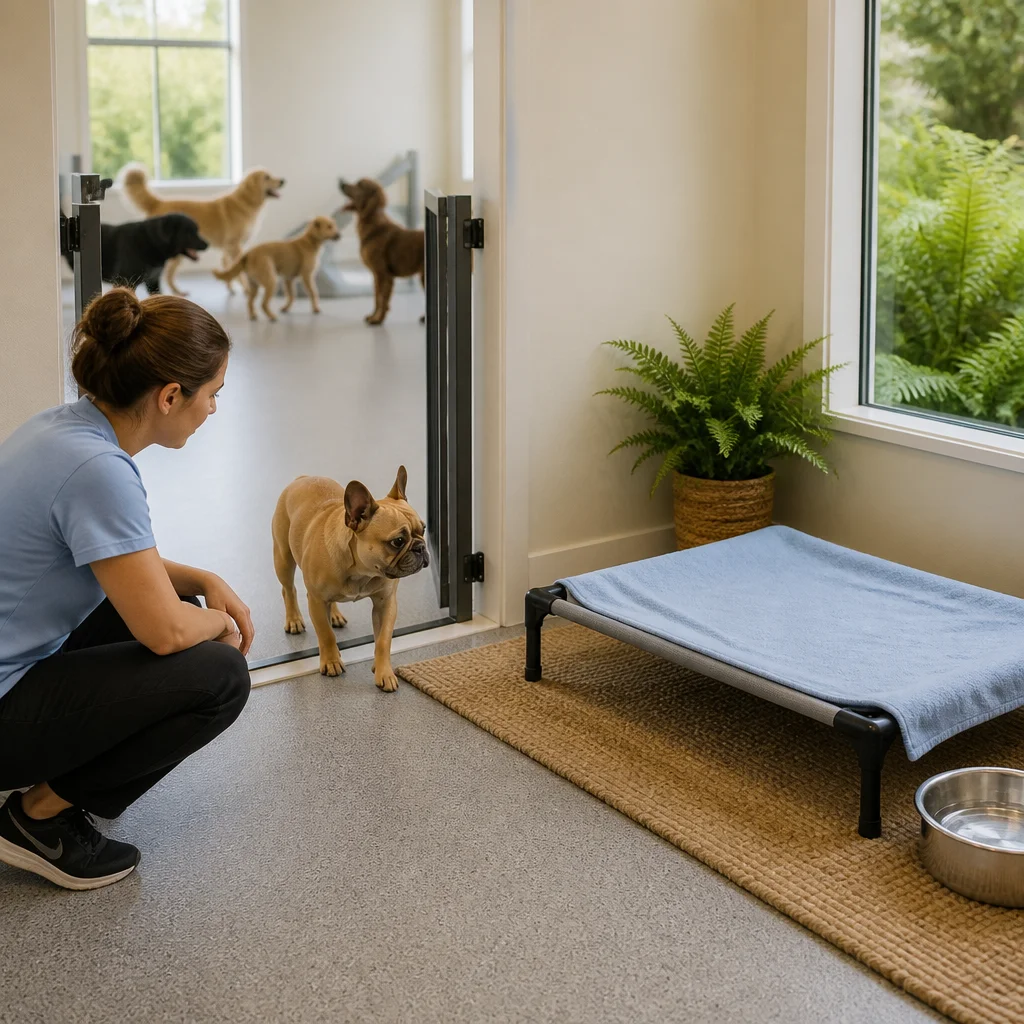
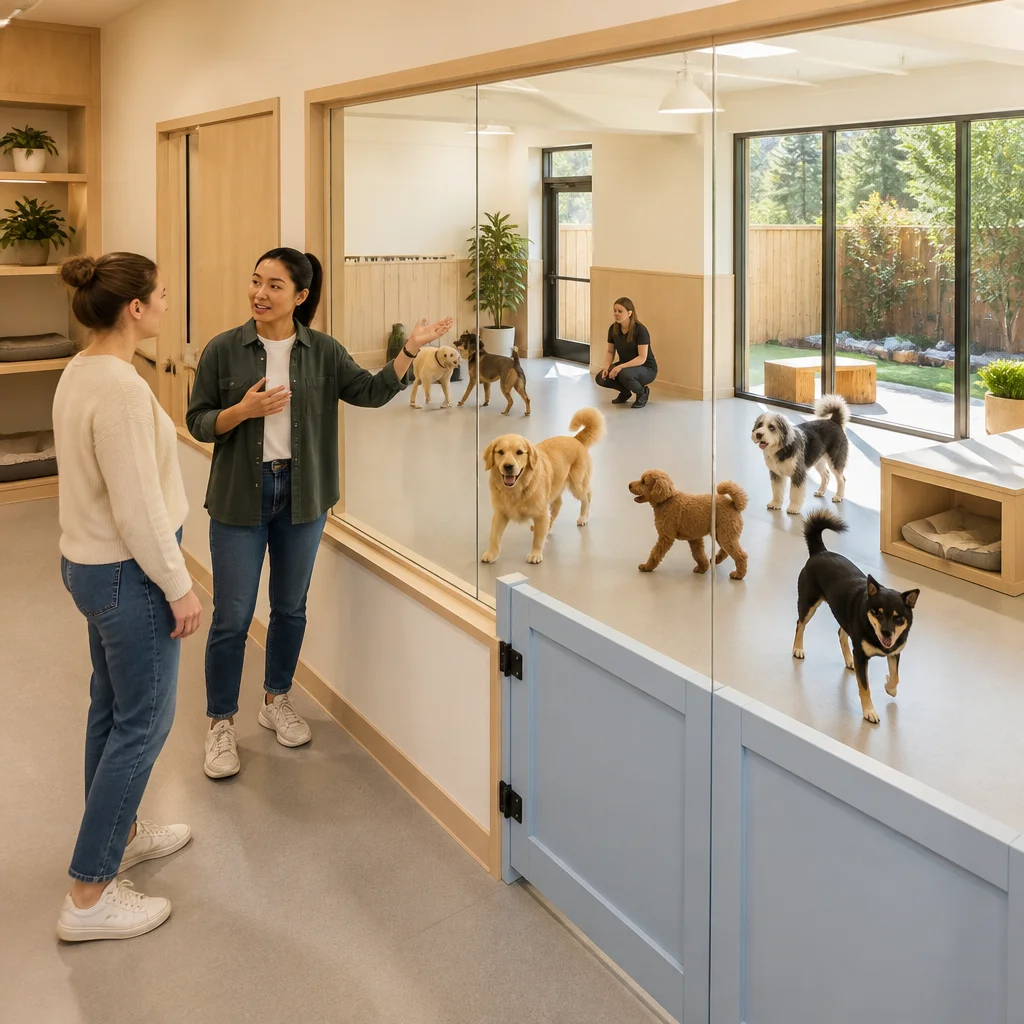
Start with the ordinary Tuesday. Where are you coming from, when can you drop off, and what is the latest time you can reliably collect? A wonderful daycare across a bridge is a poor choice if the route fails every second week.
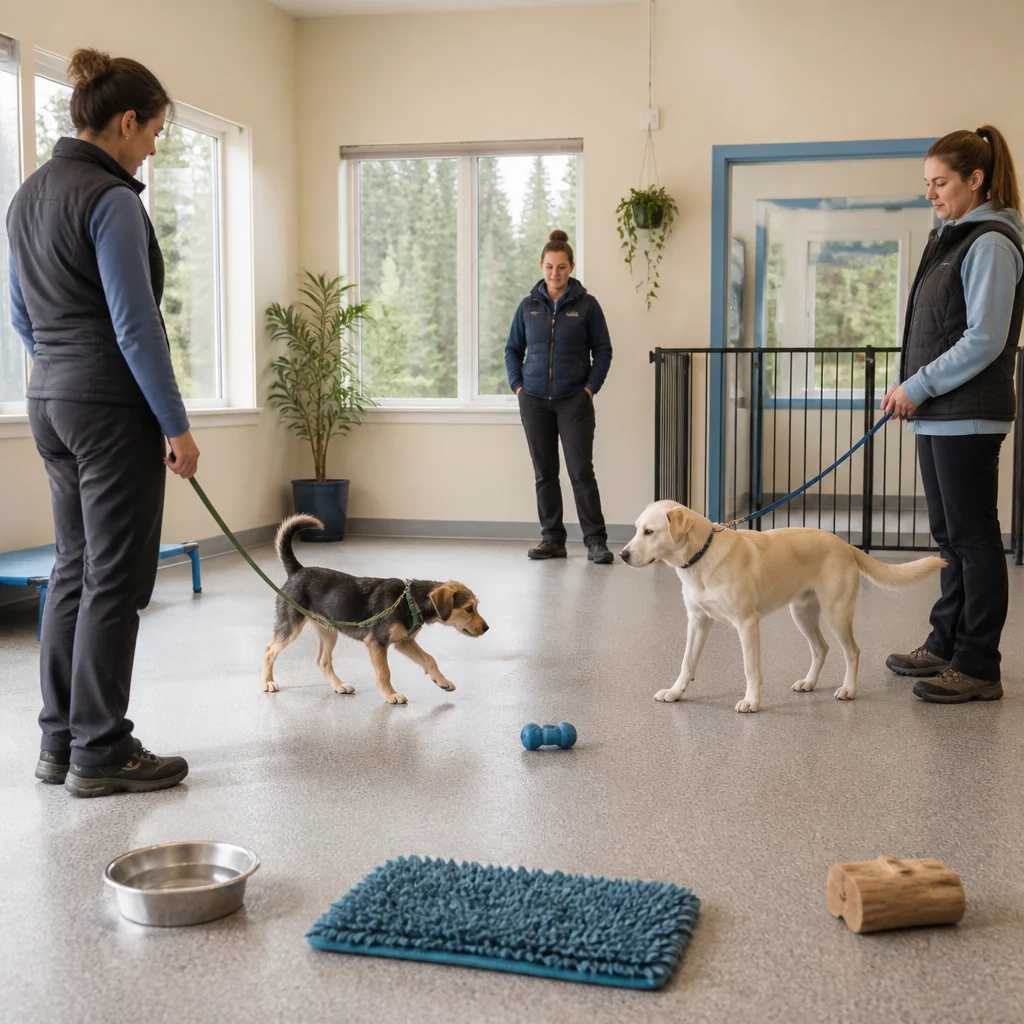
Match the day to the dog
Write down how your dog plays, how they signal a need for space, whether they can rest around activity and what happens after a busy outing. Then ask the provider to describe the group your dog would actually join, the quiet option and the process for leaving play.
The AnimalKind daycare guidance gives voluntary benchmarks: no more than 10 dogs per caregiver, a maximum group size of 20, grouping by size, age and play style, rest or hiding areas, and crate-compatibility assessment when crates are used.
Watch a transition
Entrances, gates and group changes reveal more than an empty-room tour. Notice whether staff control doors, recognize individual dogs and allow rest. Ask what happens if the trial dog avoids contact or becomes overexcited.
Check any outdoor claim
“Park time” needs a location, leash plan, group size and transport method. Vancouver parks require leashes except in designated off-leash areas, and designated areas have different hours, fencing and restrictions.
Compare the hard day
Ask what happens when rain prevents the usual outdoor plan, the group is unsettled and a caregiver calls in sick. A credible answer may involve smaller groups, reduced capacity, indoor activities or early owner contact. It need not promise that the full schedule always continues.
Then trial the service for a short, ordinary weekday. Stay reachable and ask for a report on rest, water, toileting, play choices and staff intervention. “Tired and happy” is an interpretation; “rested twice and left play when called” is evidence.
Make the route part of the choice
Confirm the street address and drive or walk it at the times you will actually use it. Include parking, elevators and the provider’s final pickup time. If closing is 6 p.m. and work ends at 6 p.m., the plan already fails. Name an authorized backup collector before the trial.
Write each finalist under the same headings: group, caregivers, rest, outdoor care, updates, emergency pickup, hours, total price and terms. Reject unresolved safety gaps. Among workable choices, prefer the day your dog can comfortably repeat and the trip you can reliably make.
Check the money after fit
Price the number of days you will actually use. Include assessment, tax, package expiry, absence rules, late pickup and the commute. Try a drop-in before buying a large pass. A discount has no value when the hours fail or the dog needs a different setting.
After three or four sensibly paced visits, review the pattern. Does the dog enter willingly, rest during the day and recover normally at home? Do reports stay specific? Is pickup still manageable during a difficult workweek? Change the visit length, frequency or provider when the answers change. Start with daycare providers and Vancouver listings, then judge the exact routine offered.