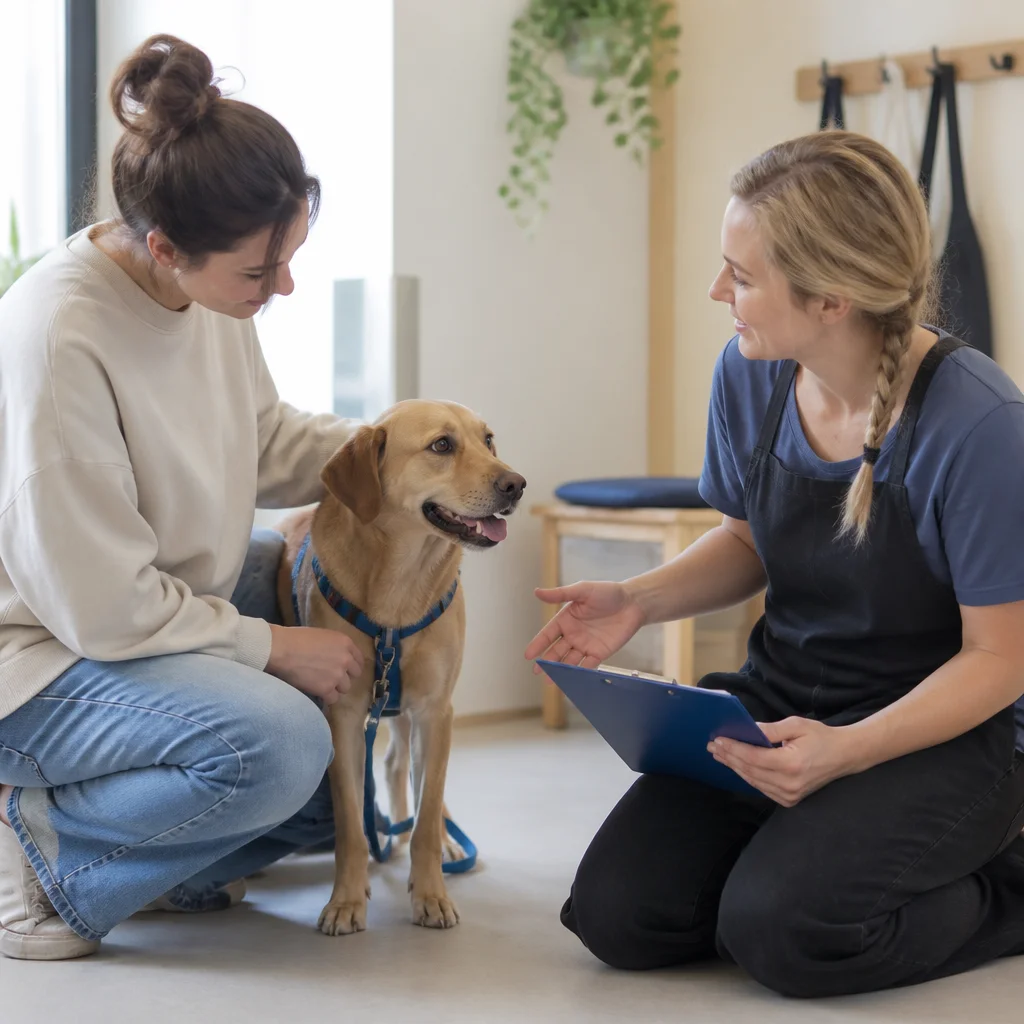
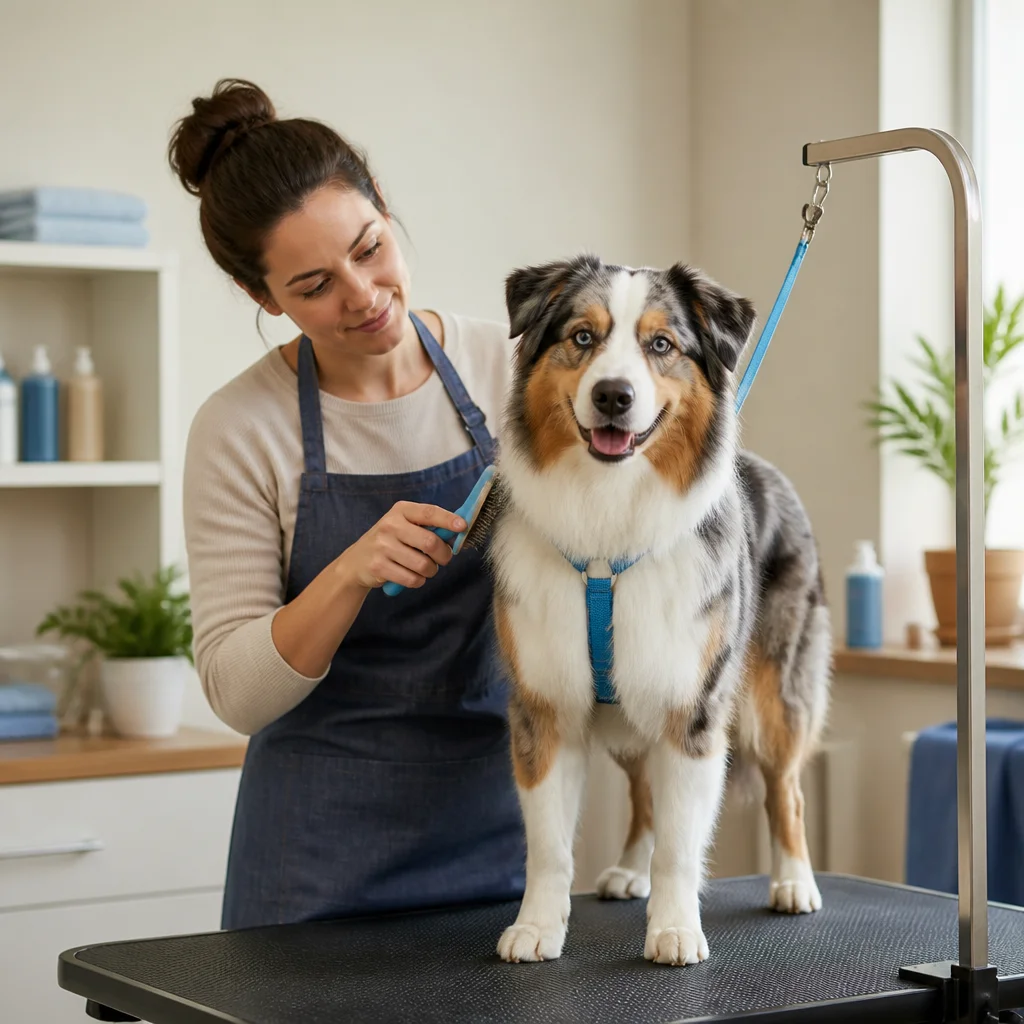
An accessible grooming appointment has to work from the parking space to the pickup conversation. A step-free front door is only one part of it. The owner may need room for a mobility device, a seat during intake or written communication; the dog may need non-slip footing, a lower transfer, fewer position changes or more time. Describe the practical need instead of asking whether the salon is “accessible.”
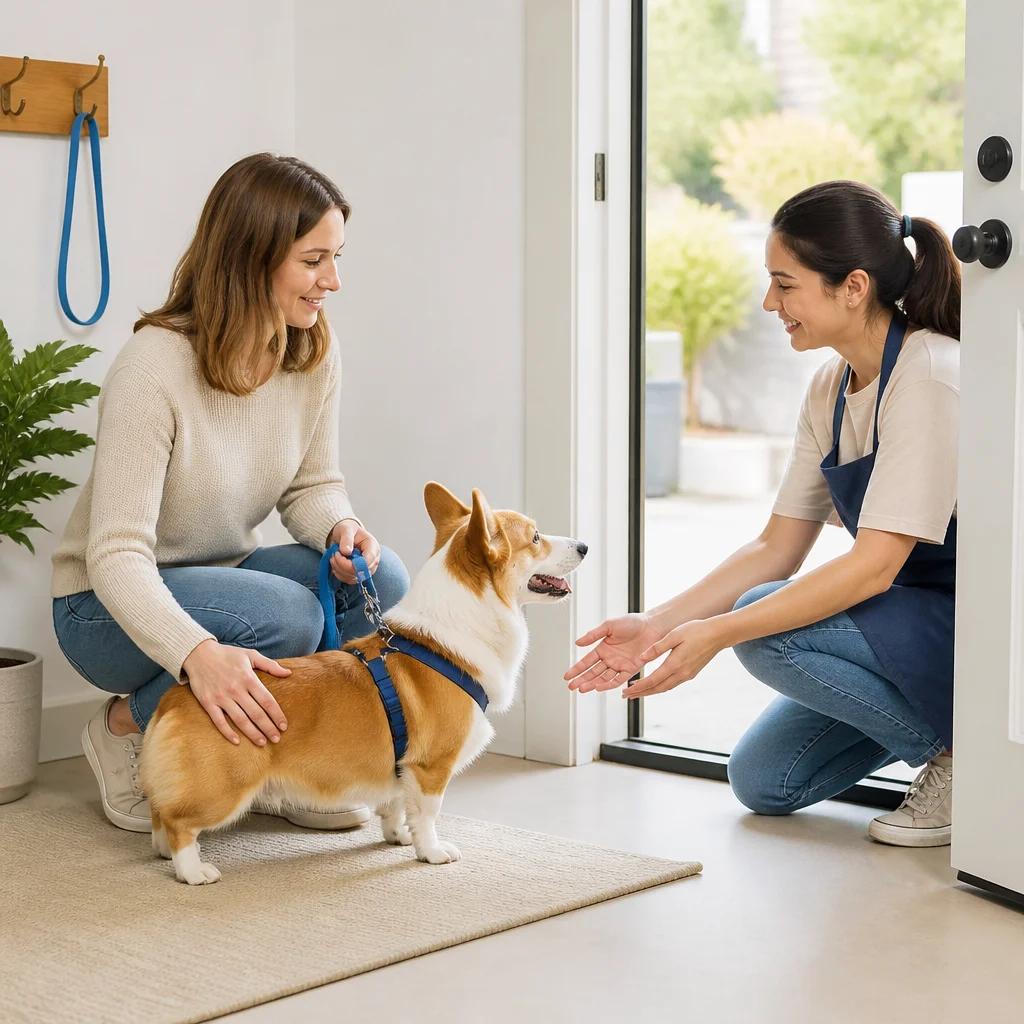
Describe what has to happen
Replace labels with actions: “My dog cannot stand for more than a few minutes,” “She backs away from forced-air drying,” or “I cannot manage stairs while holding the leash.” Share relevant instructions from the dog’s veterinarian, but ask the groomer only to explain what the salon can safely provide.
The BC SPCA AnimalKind checklist suggests asking about introductory visits, non-slip tables, supervised dryers and reward-based responses to fear. These are voluntary standards and useful conversation prompts. Ask where the dog waits, what happens when a break does not help and who calls you.
Trace two routes
Follow the owner’s route first: parking or transit, curb, entrance, waiting area, counter and washroom if needed. Ask about door weight, thresholds, turning room and where the dog will be transferred to staff. Then follow the dog’s route to the tub, table, drying area and holding space. A large dog that cannot use stairs may still face a high tub or lifting policy that makes the service unsuitable.
Use functional language. “Milo can stand for about ten minutes, needs a break before changing sides and slips on smooth floors” gives the groomer something to assess. Health and pain questions belong with the veterinarian, but the groomer needs the resulting handling limits in writing.
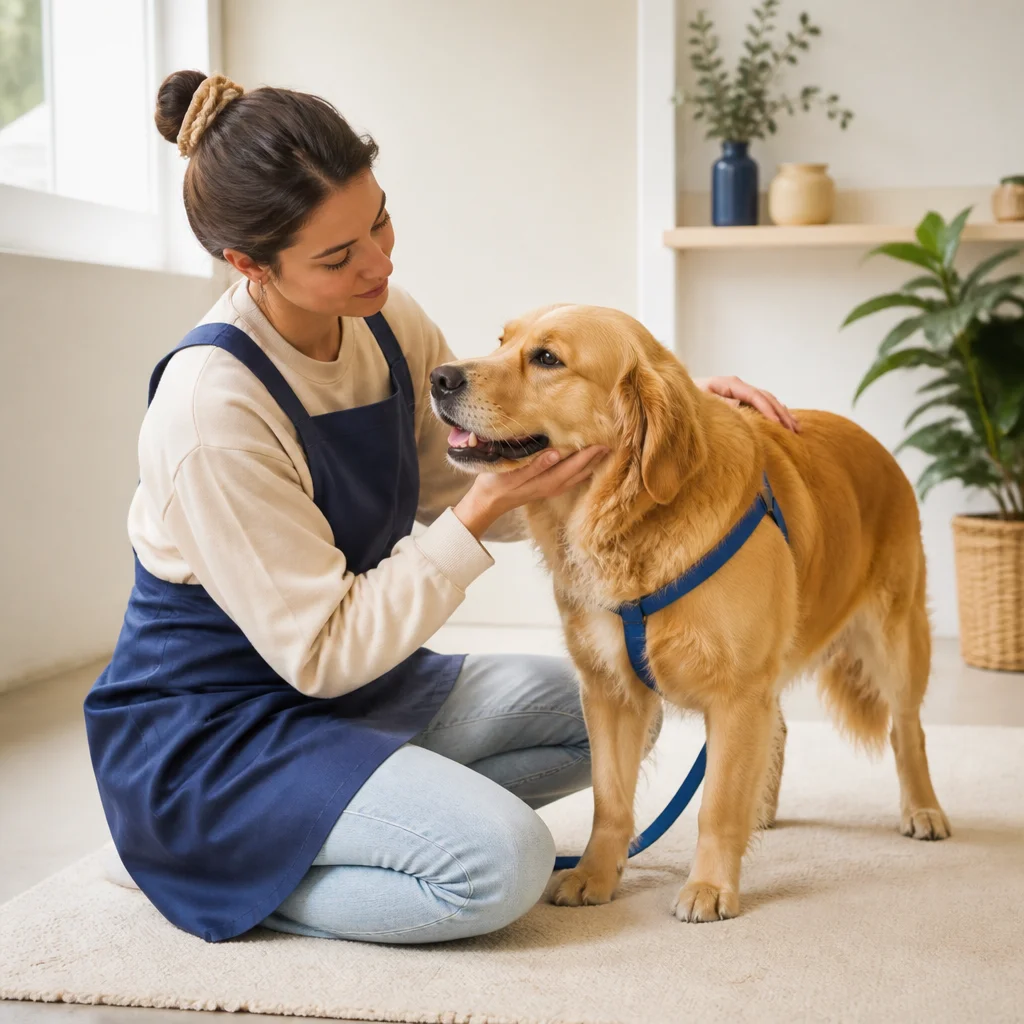
Communication access matters too. Request a written estimate and pickup report if a busy counter conversation is difficult. Agree on the method used for an approval call and what happens if it goes unanswered. If another person will collect, give them the same notes and complete the salon’s authorization process.
Sample booking note: “I use a walker and need a chair at intake. Pepper can manage the front step but cannot jump into a raised tub. Please confirm the transfer plan before we travel. Text before changing the agreed service.”
Ask for a fallback if the accessible entrance, expected staff member or suitable station becomes unavailable. An arrangement that depends on one person remembering a phone call is fragile; it should be attached to the booking.
For sensory needs, ask about the quietest part of the salon’s real day, not simply the first appointment. Clippers, dryers, barking and people arriving may overlap. A groomer who can explain which noise can be reduced, what cannot, and when they would stop gives you something you can plan around.