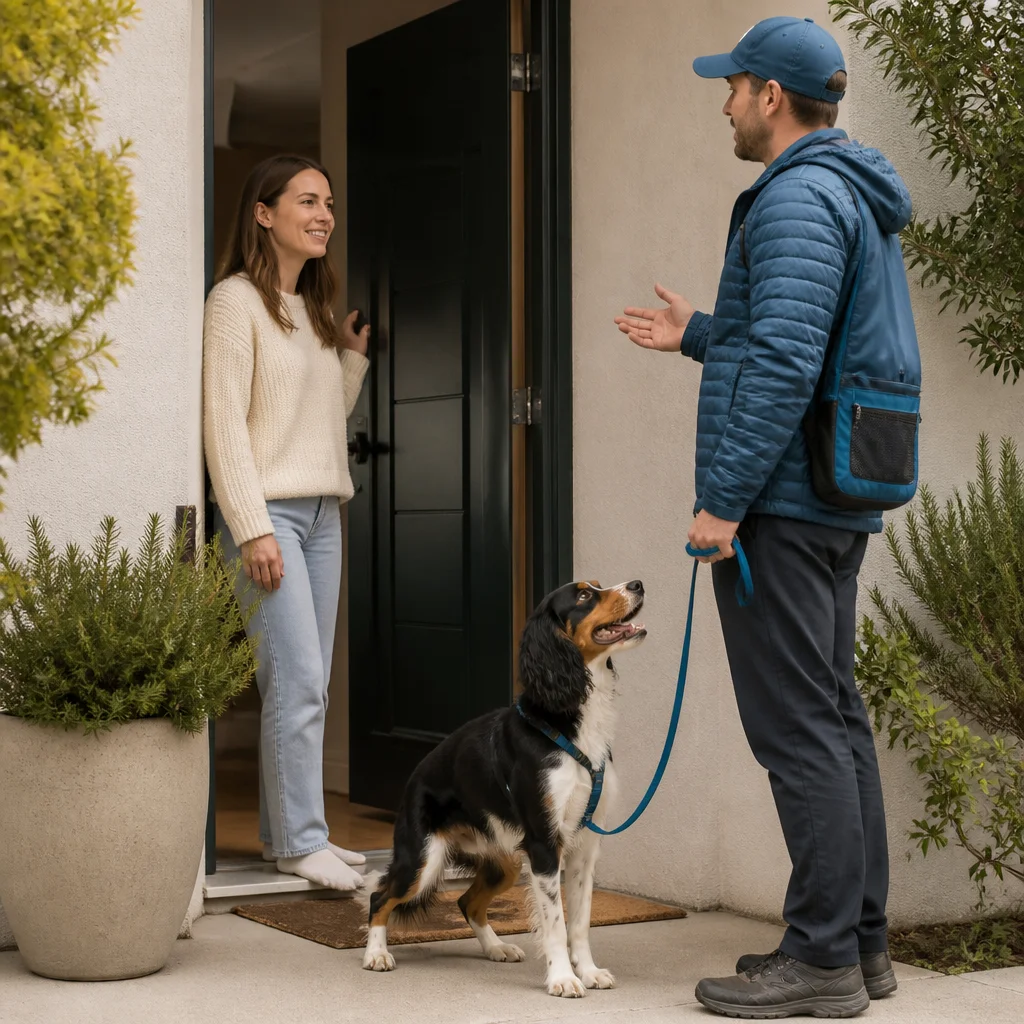
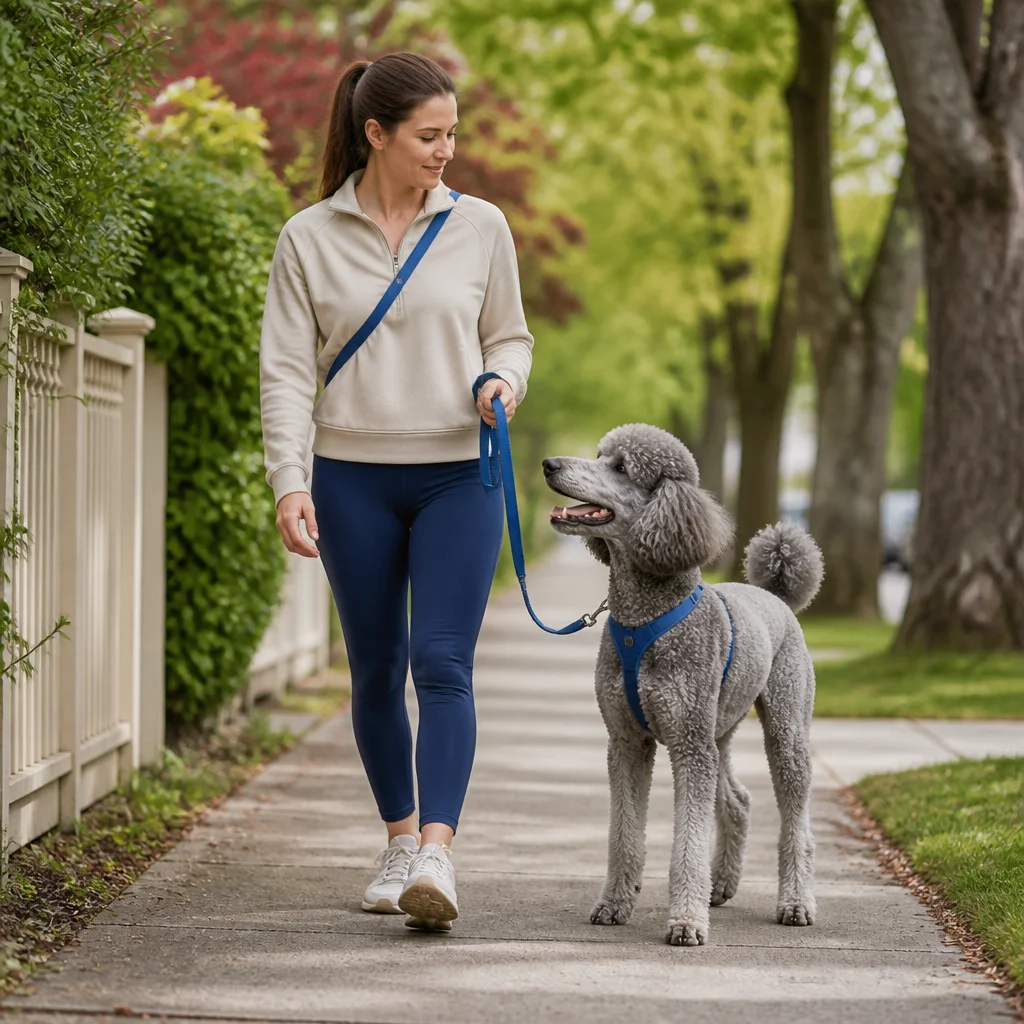
A first dog walk should be predictable from the moment the walker approaches the home to the moment the door is locked again. Ask for that sequence before handing over access.
Entry and equipment
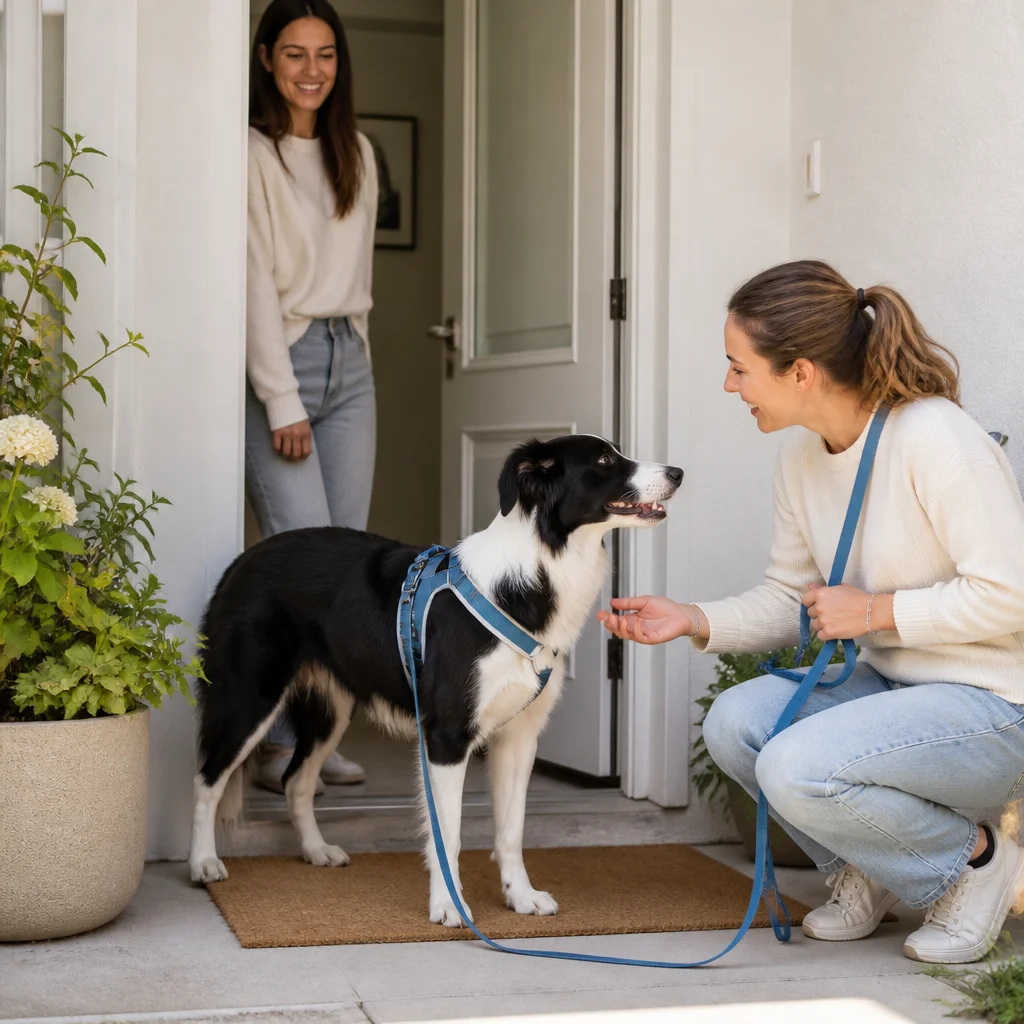
The walker should arrive within the agreed window, use the authorized key or fob and secure the exterior door. Inside, they check the dog and the named harness or collar before opening the unit door. If equipment is damaged, the dog is limping or something else has changed, the walker should use the written fallback and contact you.
In a condo, agree how the dog moves through corridors, elevators and the lobby. A dog that rushes doors may need a barrier inside the unit. A dog that reacts in elevators may need the walker to wait for an empty car. These minutes may be part of the booking, so ask when the walking clock starts.
The route and its limits
The walker follows the agreed neighbourhood or park plan and the dog-contact rule. The City of Vancouver says dogs are leashed in parks except in designated off-leash areas. In those areas, handlers should leash dogs entering and leaving and handle no more than three dogs. The owner should still give explicit permission before any off-leash activity.
If weather, construction or a loose dog blocks the route, the walker may need to turn around. Decide in advance which nearby route is acceptable and what indoor care replaces unused outdoor time. A change from a private walk to vehicle transport or a group should require approval.
The update should answer practical questions
A useful report gives approximate outdoor time, route, toileting, unusual encounters and any change. A photo can be pleasant evidence of the outing but does not replace the facts. If the dog refused to leave, vomited or slipped equipment, expect prompt contact rather than a surprise at the end of the day.
On return, the walker removes equipment in the agreed secure place, refreshes water if included, puts the dog where requested and checks locks. After the first booking, compare the report with the promise. Correct access or route notes immediately so the second walk is easier.
A worked first-walk timeline
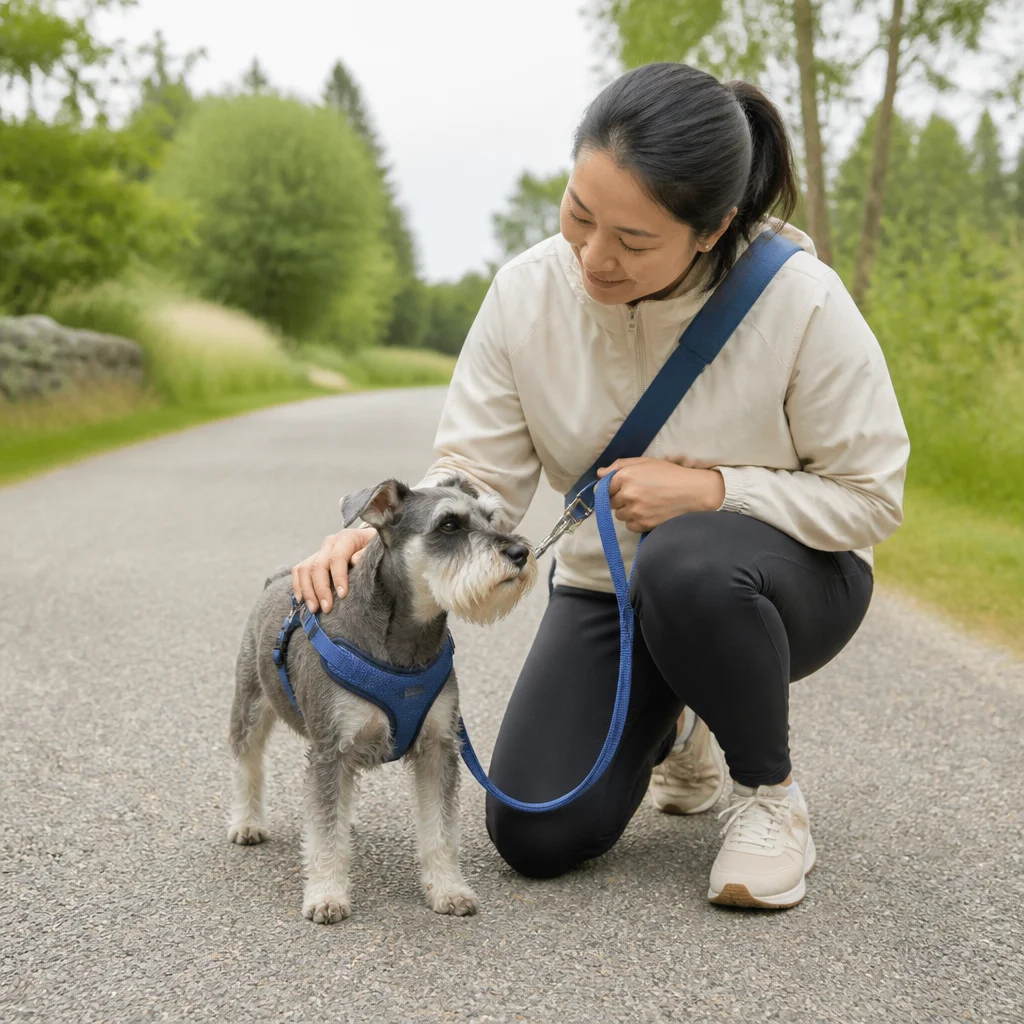
Imagine a noon booking with an 11:30 a.m.–12:30 p.m. arrival window. At 11:52 the walker messages that they have entered, checks the harness and leaves the building at noon. The dog spends 35 minutes outside, returns at 12:35, has water refreshed and is settled by 12:42. The report arrives at 12:45.
That sequence shows why “30-minute walk” needs a definition. It also gives the owner useful points to check: Was arrival inside the window? Was outdoor time what was promised? Did the update arrive after the home was secure? Your provider’s timing may differ, but it should be understandable before the booking.
Read the dog, not only the map
A long GPS trace can be the wrong outcome for a dog who wanted to sniff slowly, needed shade or became uncomfortable. Ask the walker to note pace, willingness to continue and recovery after returning. For a young high-energy dog, you may care about active movement and safe play. For an older dog, comfortable footing and a calm return may matter more than distance.
If the dog reacts to another dog or refuses a street, the report should say what the walker did: crossed, turned around, increased distance or ended early. “A little nervous” is less useful because it does not show whether the agreed handling plan was followed.
When to change the second booking
Change the route when the first one repeatedly creates a difficult encounter. Change the arrival window when it misses the dog’s real need. Change the equipment only with a clear reason and owner agreement. If access, timing and handling all worked, keep them stable while adjusting a smaller detail. The first walk is a test of the whole handoff, not an audition for a perfect photo.