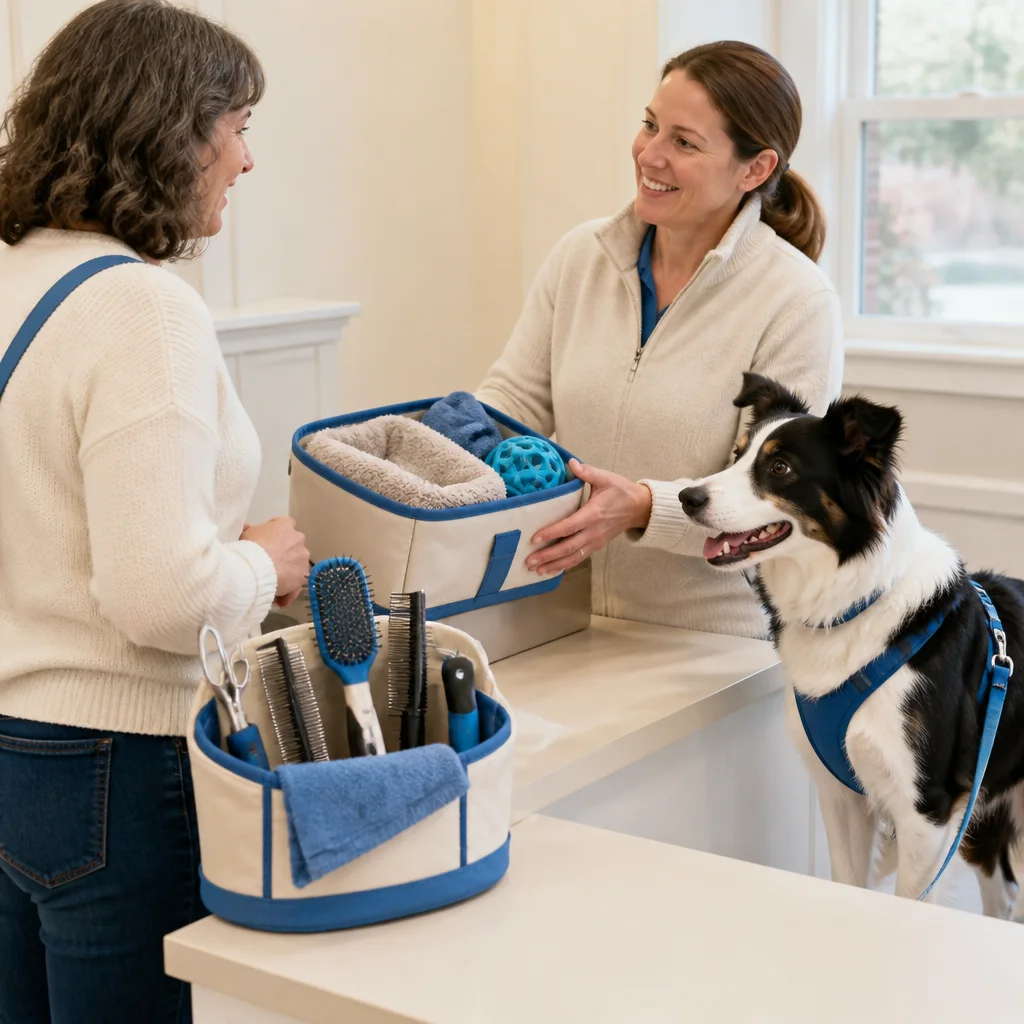
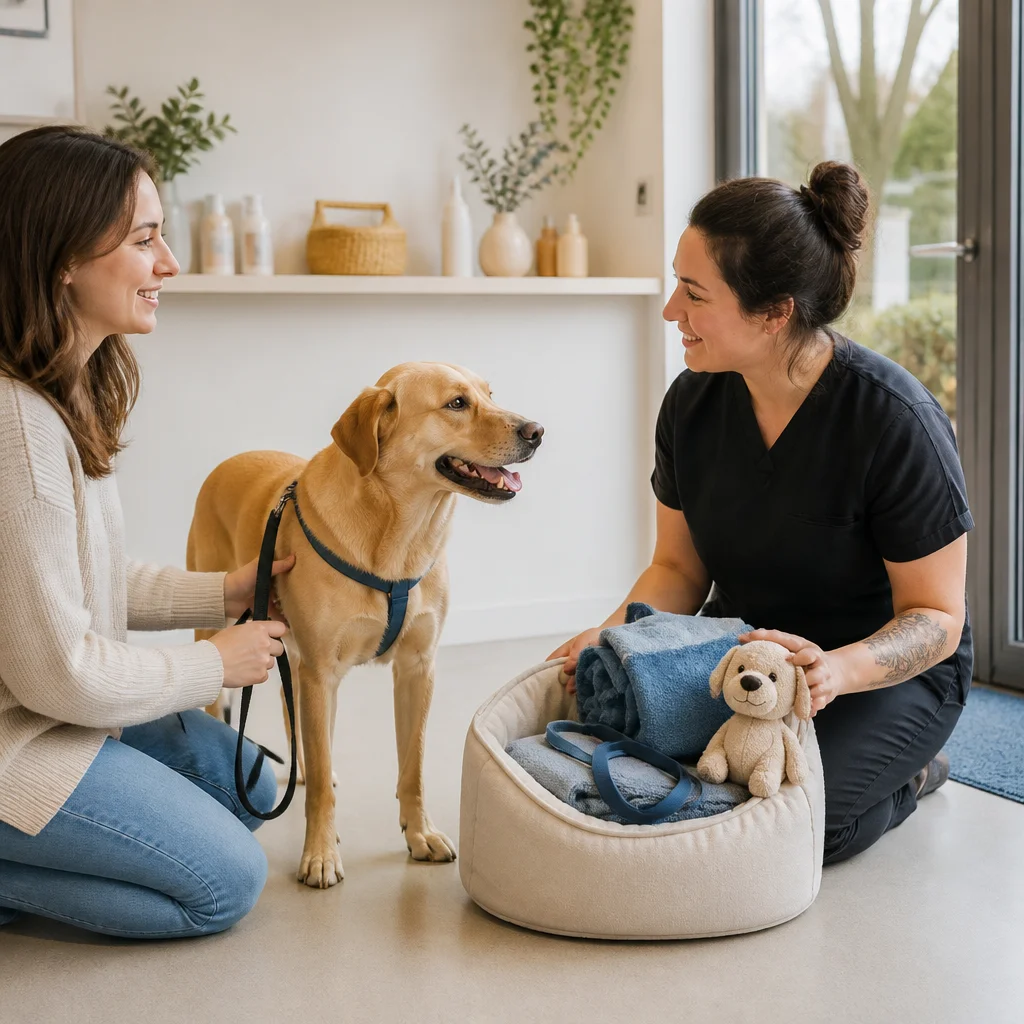
Grooming and boarding solve different problems. Combining them can save a trip, but it also adds a handoff, timing dependency and a second set of instructions. Decide first whether the groom should happen before, during or after the stay, then find out who is actually responsible at every transfer.
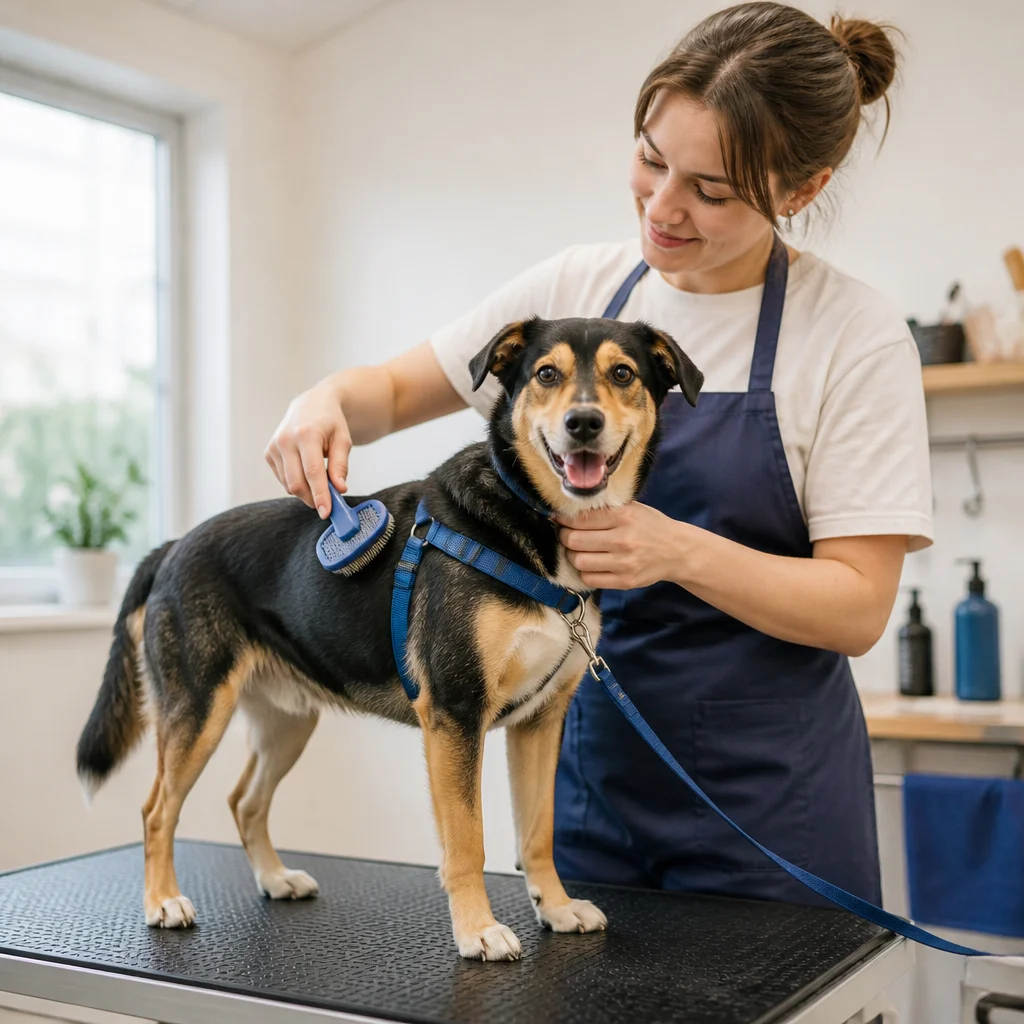
Choose the order for a reason
Grooming before boarding can send the dog into the stay clean, while placing two unfamiliar services close together. Grooming during boarding reduces owner travel only if the boarding provider and groomer have a documented arrangement. Grooming after pickup may separate the experiences but creates another appointment when the dog may need rest.
Ask both providers what they recommend for the individual dog’s tolerance and coat plan. Do not ask boarding staff to diagnose a coat or health issue, and do not assume the groomer can accept a dog directly from another business.
Map the custody chain
Write the sequence with times and names: owner drops at boarding; named staff member transports or releases to groomer; groomer returns at an agreed time; boarding staff checks the dog and receives a report. Identify who supplies the leash, who may authorize changes, who pays and who receives an emergency call.
If the businesses are not formally coordinating, treat them as separate appointments. The owner or authorized person may need to handle transport and repeat the dog’s current instructions.
Protect the boarding routine
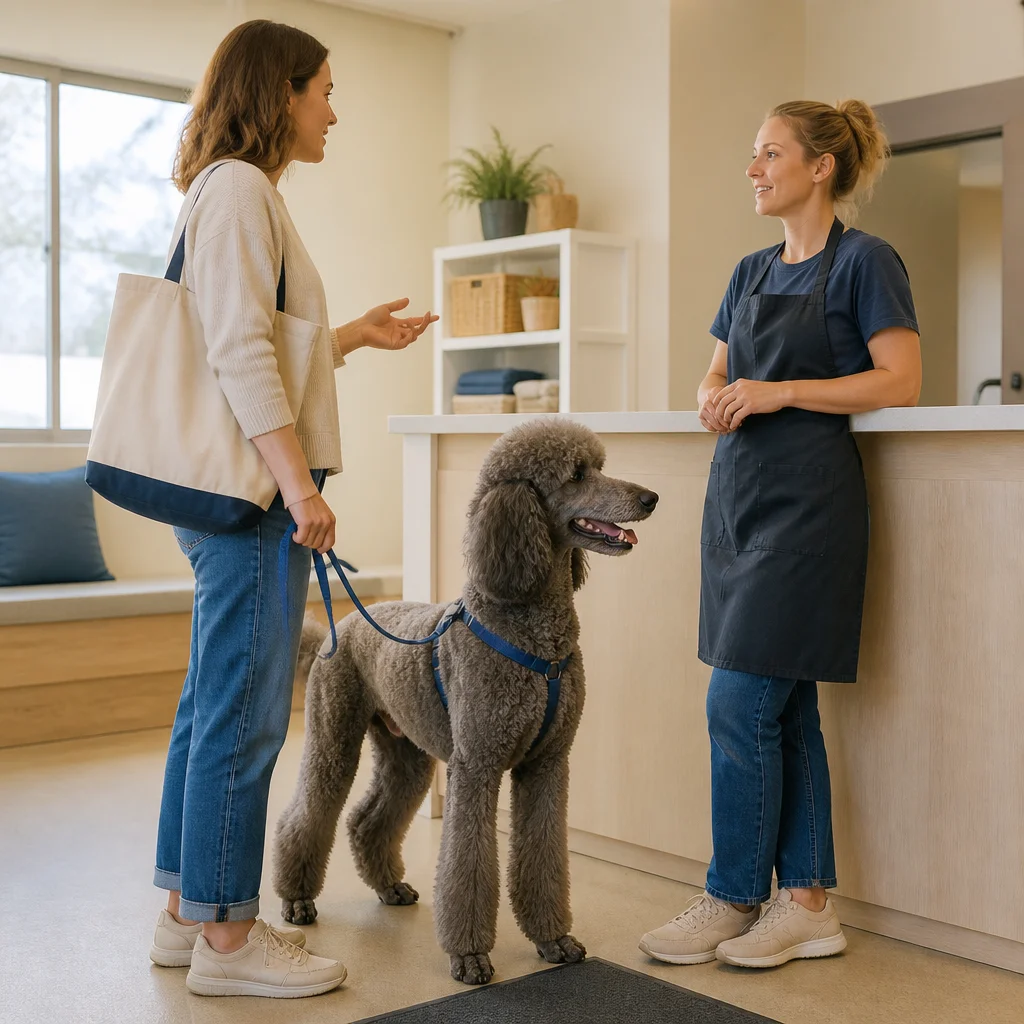
Confirm meals, medication directions, rest and pickup around the grooming window. A long grooming day can conflict with a scheduled meal or quiet period. Ask how an incomplete groom or late return affects the stay.
Keep two invoices and two sets of terms. A combined marketing package can still contain separate cancellation rules. Convenience is real only when responsibility, timing and the dog’s recovery all remain clear.
A worked example: a dog boards Friday evening to Monday morning and needs a bath after a muddy weekend. A Monday grooming appointment may save a trip, but only if checkout, transport and owner approval align. If pickup from boarding is 9 a.m. and the salon arrival window ends at 8:30, the bundle fails despite both businesses being nearby. Put the actual handoff times on one calendar.