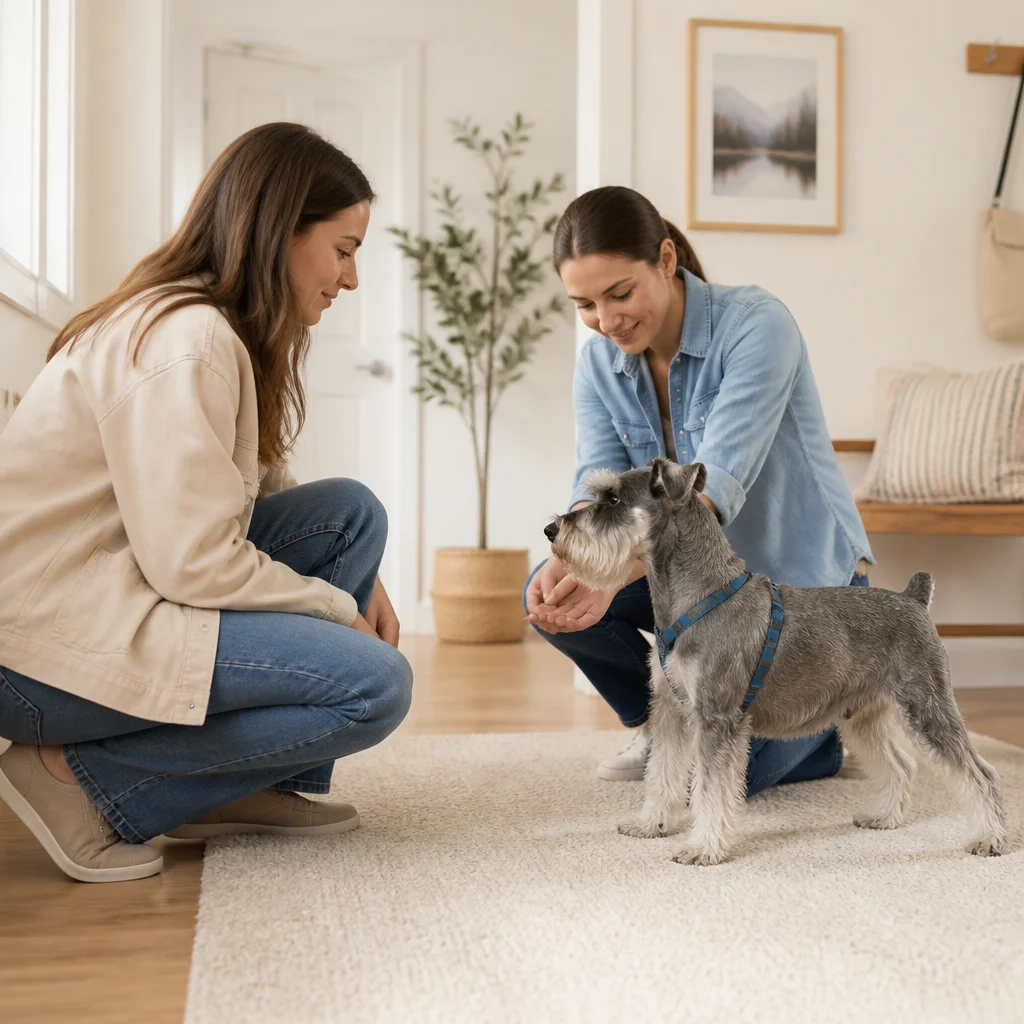
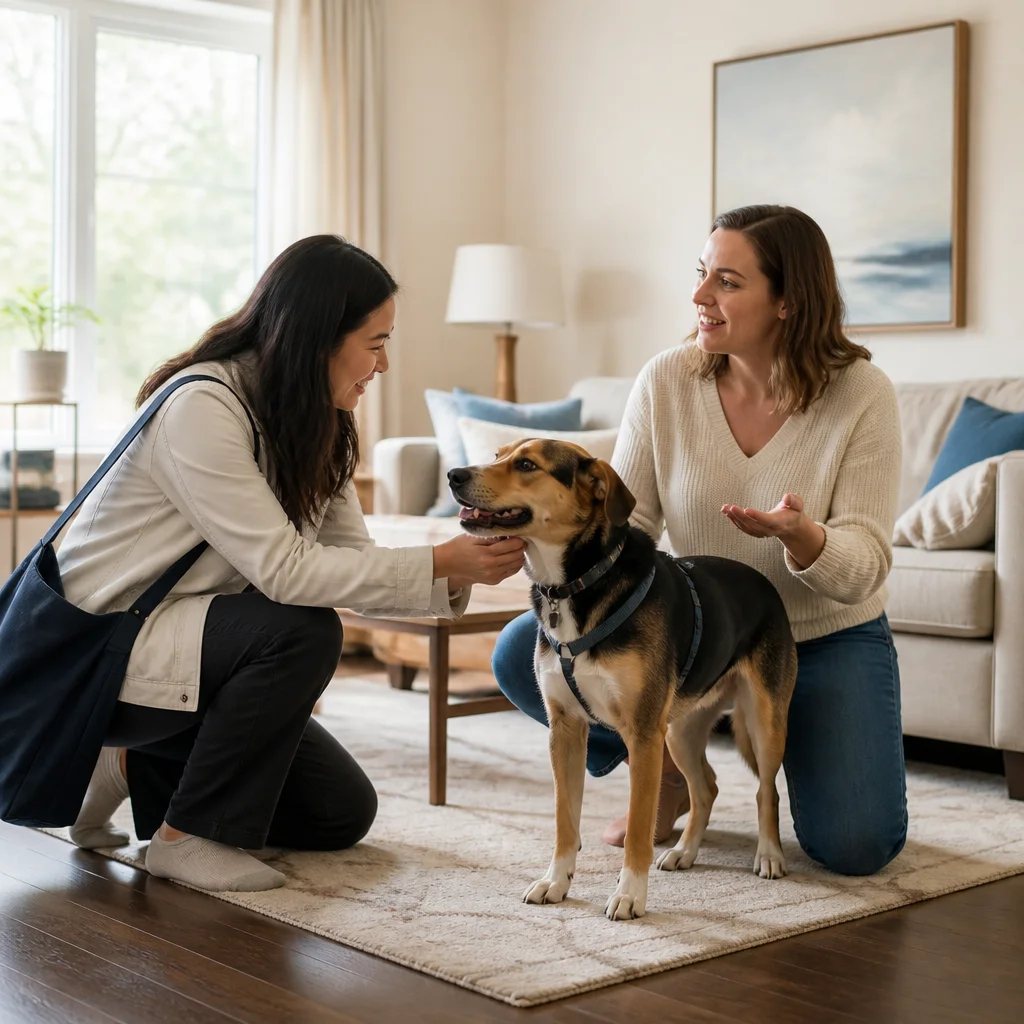
Compare pet-sitting options by drawing the hours the pet receives care and the hours they remain alone. Home visits, overnights, live-in care and boarding in a sitter’s home move responsibility in different ways.
Define each option in plain hours
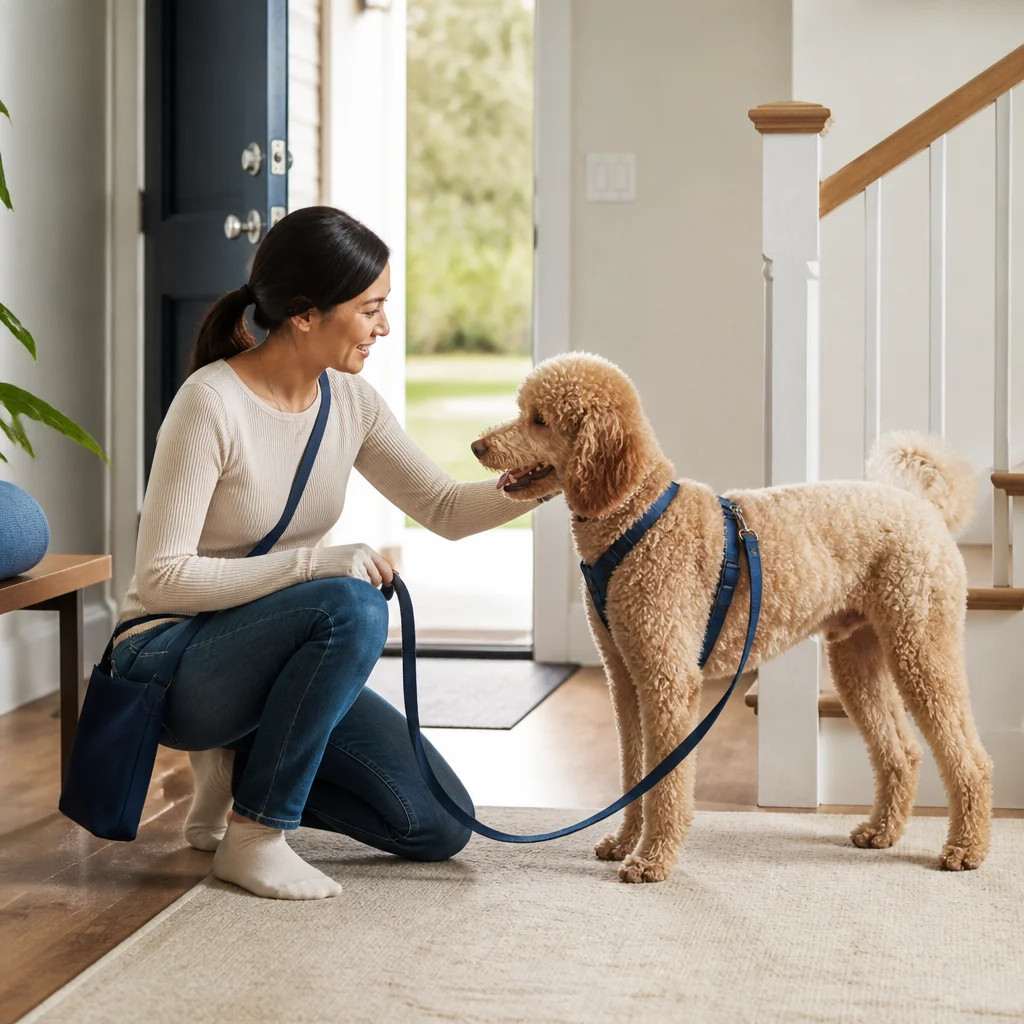
A drop-in is a scheduled visit to your home. Ask for its arrival window and time inside. An overnight usually covers part of the evening and morning, but the sitter may arrive late or leave early. Live-in care may provide broader presence while still allowing absences for work or other clients. Boarding moves the pet into the sitter’s home and adds transport, resident animals and a new environment.
Consider a Friday 4 p.m. departure and Sunday 8 p.m. return. Two visits a day might leave long afternoon and overnight gaps. An overnight sitter from 9 p.m. to 7 a.m. covers night but not midday. Live-in care with a five-hour daytime absence creates a different gap. Mark feeding, toileting, walks and medication against each schedule.
Compare responsibility at the home
Home care requires keys, fobs, alarms and clear lock-up. Ask who stores access, whether a backup can use it and how loss is reported. Disclose cameras and agree on private areas. Tell the sitter about cleaners, relatives or contractors who may enter; an unexpected open door makes responsibility unclear.
Boarding removes your home-access problem but creates a handoff at another property. Ask about resident pets, sleeping space, time alone, secure doors and who transports the pet if you are delayed. A familiar home is not always better, and a sitter’s home is not automatically more supervised.
Compare the same care list and total
Send every candidate the dates, number of pets, meals, medication instructions, walks and longest acceptable absence. Record time present, assigned person, extra-pet charges, holiday rates, transport and cancellation. A lower daily rate may cover fewer hours or require owner transport.
The BC SPCA recommends a meet-and-greet and questions about handling, backup and emergencies. Ask each option who attends if the assigned person is sick and how veterinary care is arranged.
Compare the pet's adjustment cost
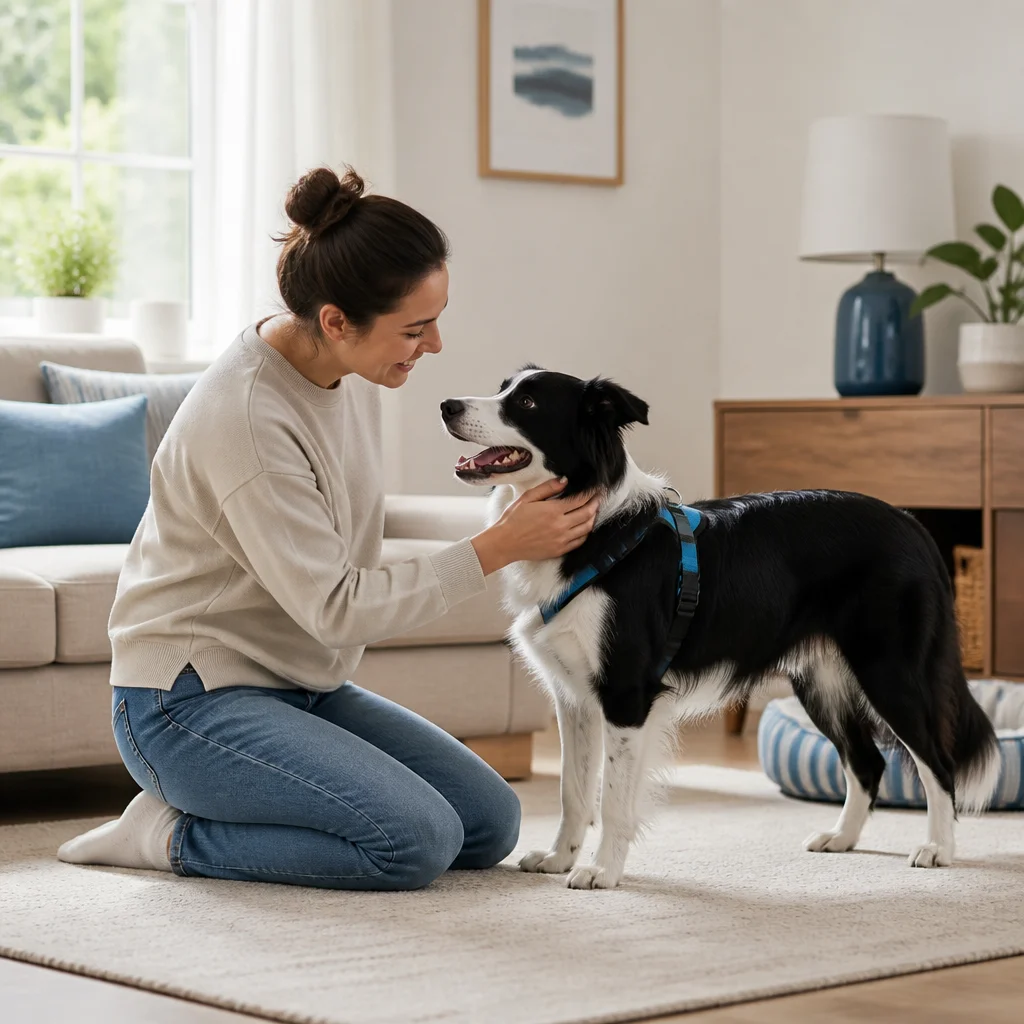
A service can look efficient on paper while asking too much of the pet. A cat who hides from visitors may still do better with short home visits than transport to another household. A social dog may enjoy the sitter’s home but struggle with resident pets. Ask what introduction or trial the provider uses and what would end it.
Also consider the owner’s handoff work. Home visits require preparing access and supplies. Boarding requires packing, transport and scheduled pickup. Put those hours beside the invoice when two options are close.
Test the failure that matters most
For home visits, ask what happens if the fob fails. For overnight care, ask what happens if the sitter’s daytime return is delayed. For boarding, ask who can collect the pet if your flight is cancelled. The strongest option has a workable bad-day plan as well as an attractive normal day.
Before deciding, ask each provider to describe one recent schedule change in general terms: what changed, who contacted the client and how care continued. The answer shows whether the backup exists in practice. Keep the final comparison to five lines—hours, place, person, total and fallback—so a polished package name cannot hide a missing part of the day.
Trial the closest choice before a long trip. Review actual hours, pet response, reporting and handoff. Choose the format that covers the full absence without relying on a label to fill missing time.