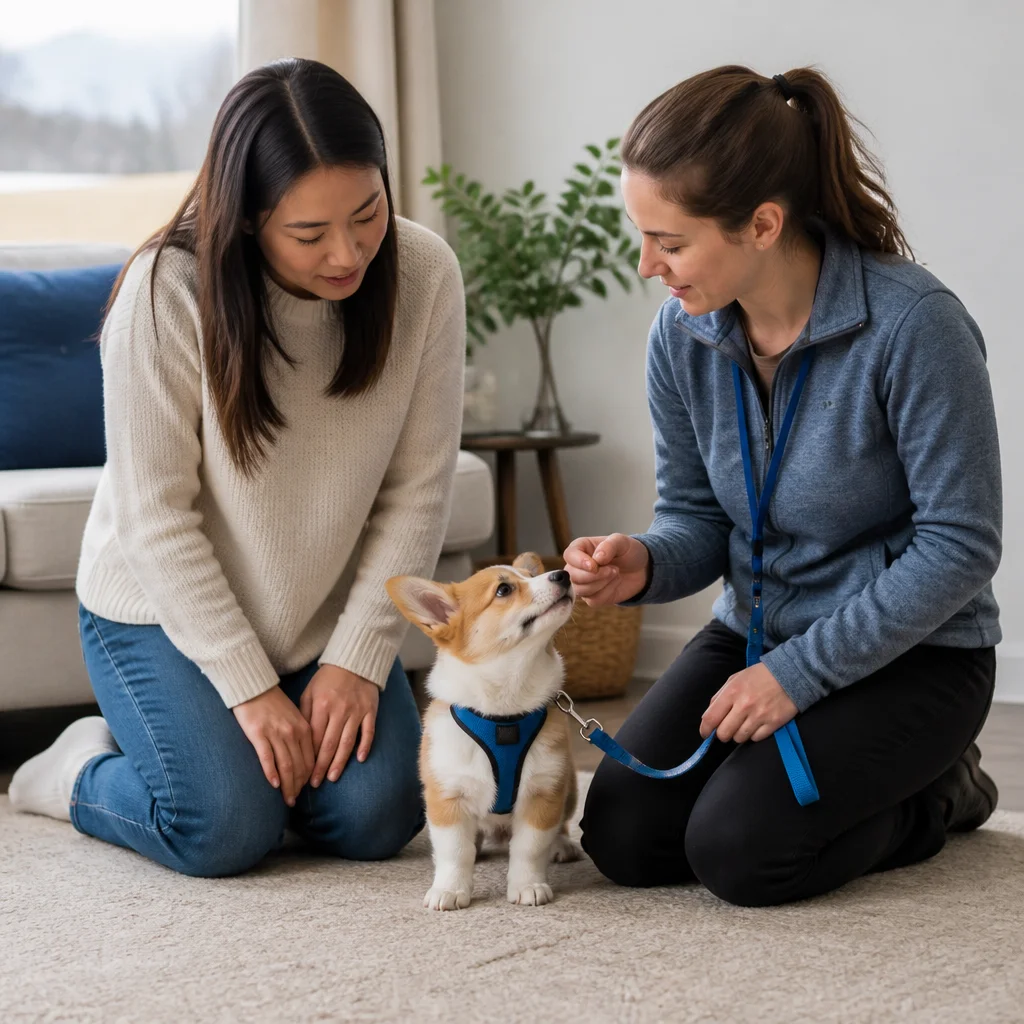
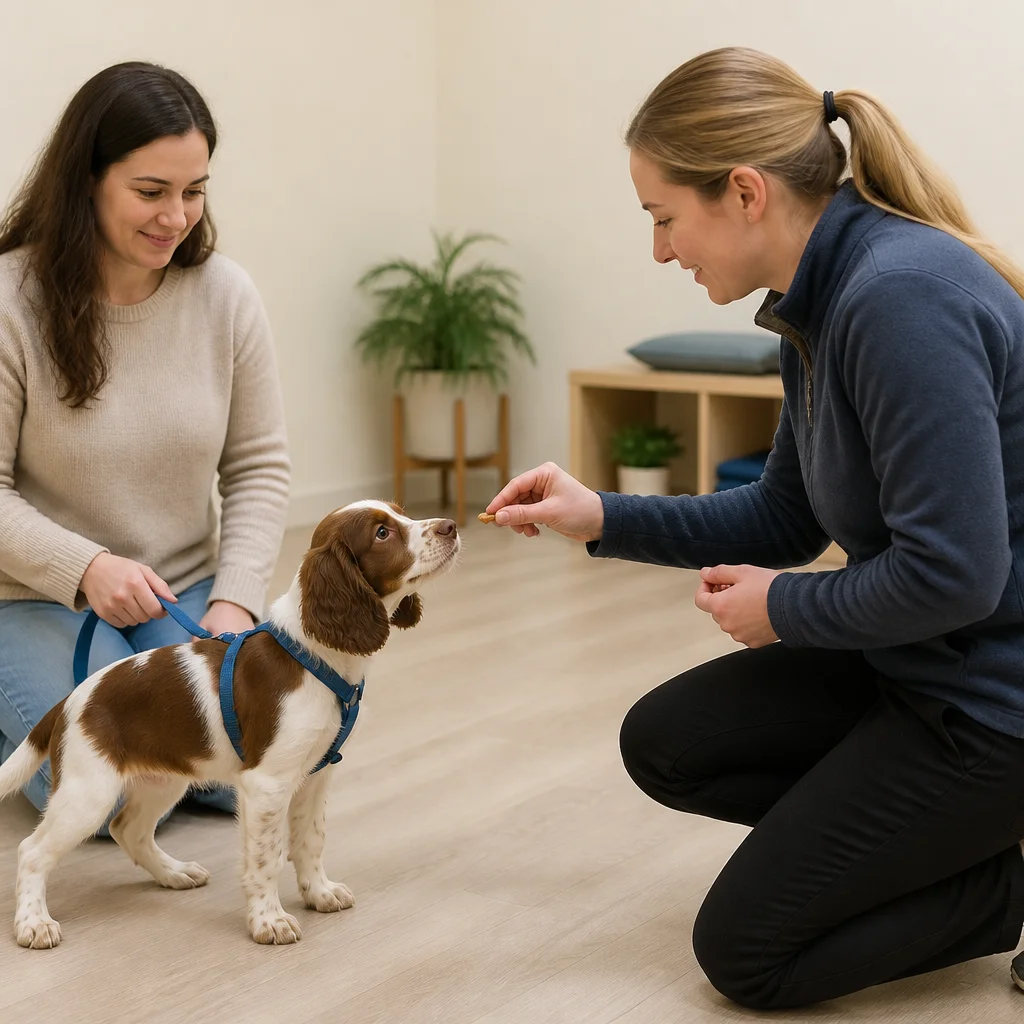
Accessible puppy training lets the person learn and the puppy stay comfortable enough to take part. Tell the trainer what would remove the actual barrier: seated handling, written steps, captions for an online lesson, a support person, a quieter entrance or shorter working turns.
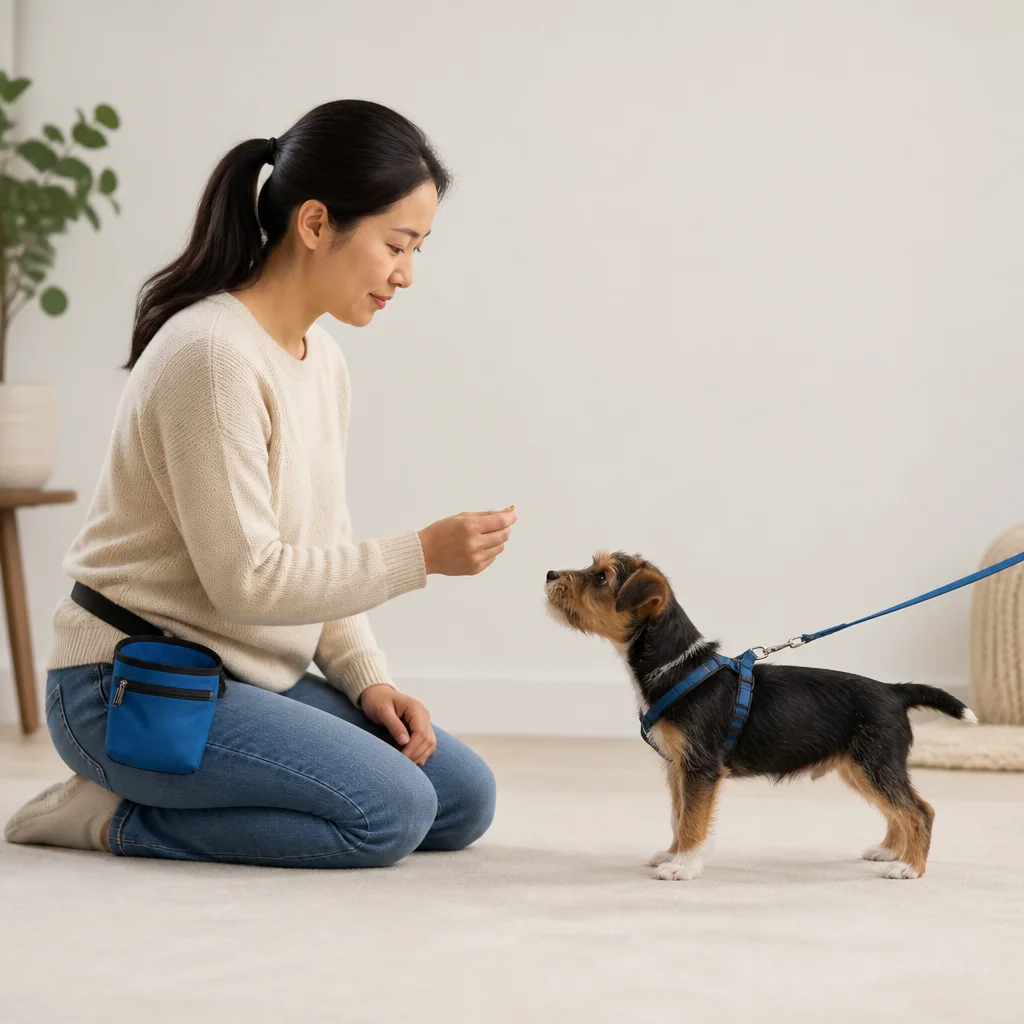
Describe the lesson you can participate in
Ask whether exercises can be done from a chair or with limited hand movement, and whether demonstrations can be repeated from another angle. If hearing or processing spoken instructions is difficult, request the exercise in writing. Confirm the route from parking or transit, stairs, doors, washroom access, flooring and seating at the exact Langley venue.
Describe the puppy’s needs just as concretely. “Needs five metres from unfamiliar dogs before taking food” helps more than “shy.” Ask about visual barriers, a separate arrival, a mat away from the group and permission to leave early without turning it into a failure.
Protect rest and choice
The BC SPCA’s puppy guidance frames socialization as positive experience and recommends giving a puppy a safe place to withdraw. Accessibility can include sensory access for the puppy: lower noise, fewer greetings and time to sleep after travel.
The trainer should be able to shorten an exercise or change its setup while keeping the method humane. The BC SPCA recommends reward-based teaching and guardian participation. Avoid a provider who treats either learner’s need for adaptation as disobedience.
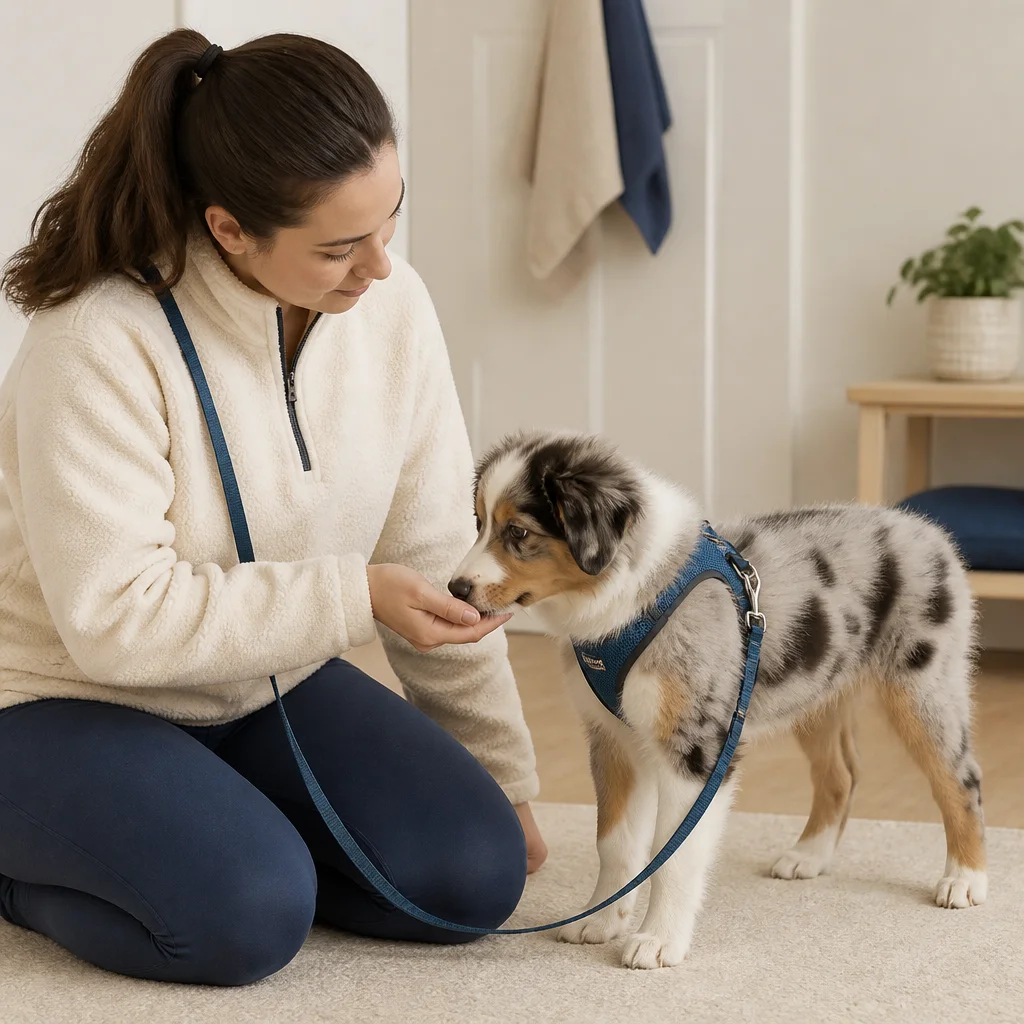
Test one small lesson
Begin with a consultation or single session. Pick one repeatable goal, such as rewarding the puppy for settling on a mat while the handler remains seated. Afterwards, decide whether the instructions were clear, the route was manageable and the puppy could recover between turns.
A useful trial scenario
Imagine a handler who needs to remain seated and a puppy who startles when dogs pass close behind. A workable lesson might place the team at an end station with a wall behind them, use a target exercise that can be cued from a chair, and let the puppy rest behind a barrier while the instructor explains the next step. The trainer can bring the demonstration to the team instead of requiring repeated movement across the room.
Before booking a series, ask the provider to describe its version of that plan. “We are inclusive” is encouraging but incomplete. You need to know where the station would be, whether the entrance route is usable, who moves equipment and how instructions will be shared. After a trial, judge whether both learners could participate without depending on improvised help from another client.
If the venue is the obstacle, ask about a home visit or remote coaching. If the group is too intense, private work can build skills before another attempt. Browse Langley providers and training options, then ask about the exact adaptation before booking.