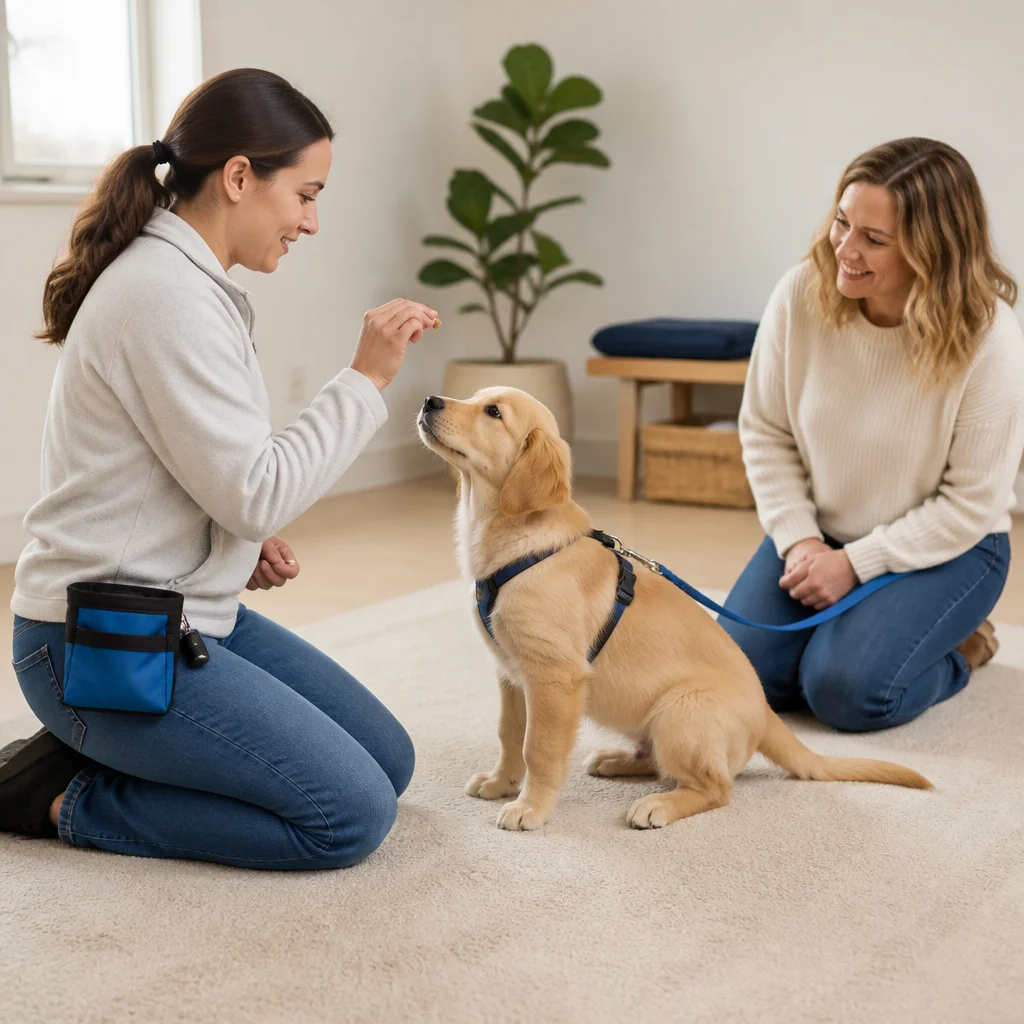
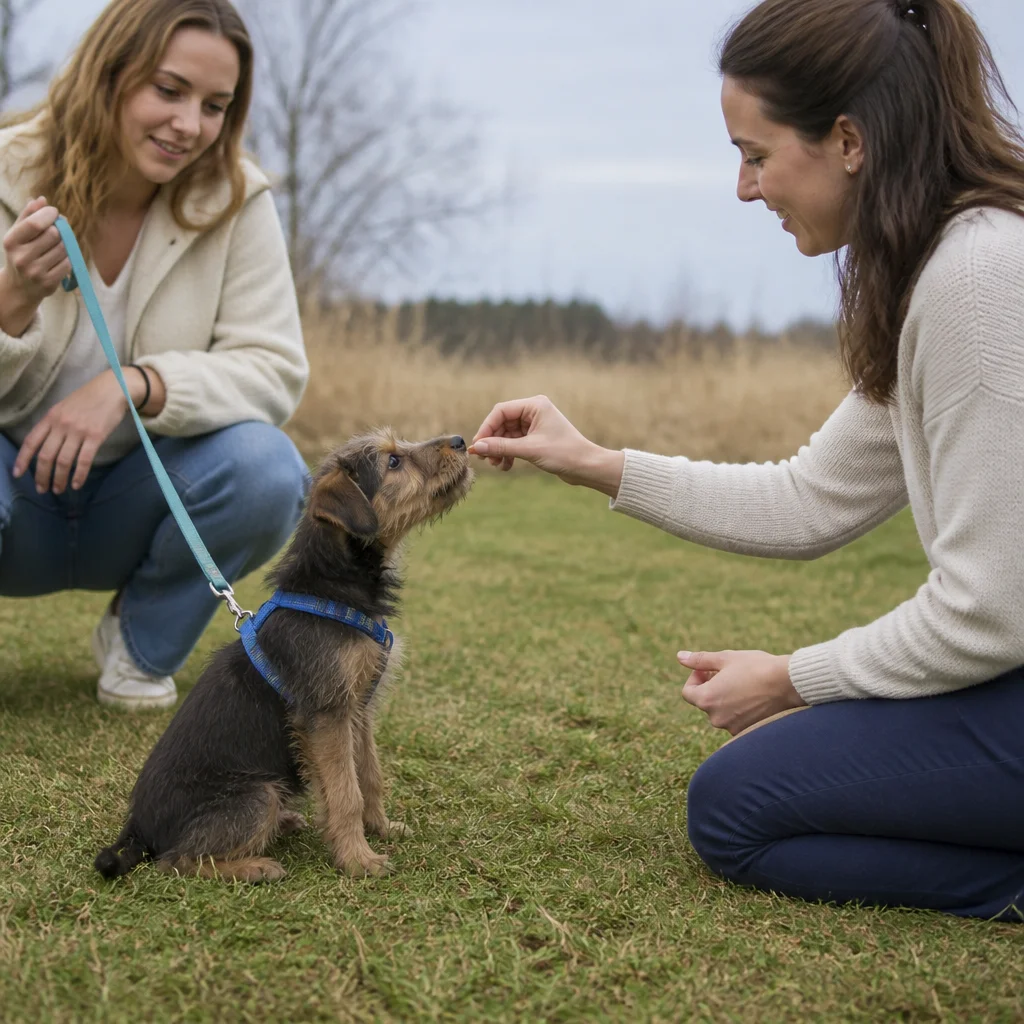
A first puppy class goes more smoothly when the instructor knows what the puppy has experienced and you arrive with a small goal rather than a long wish list.
Before you enrol
Ask your veterinarian whether the proposed class and setting suit this puppy’s health circumstances. Ask the trainer for its current admission requirements and the private method for sending any required record. A trainer’s rule is not a personalized vaccine schedule.
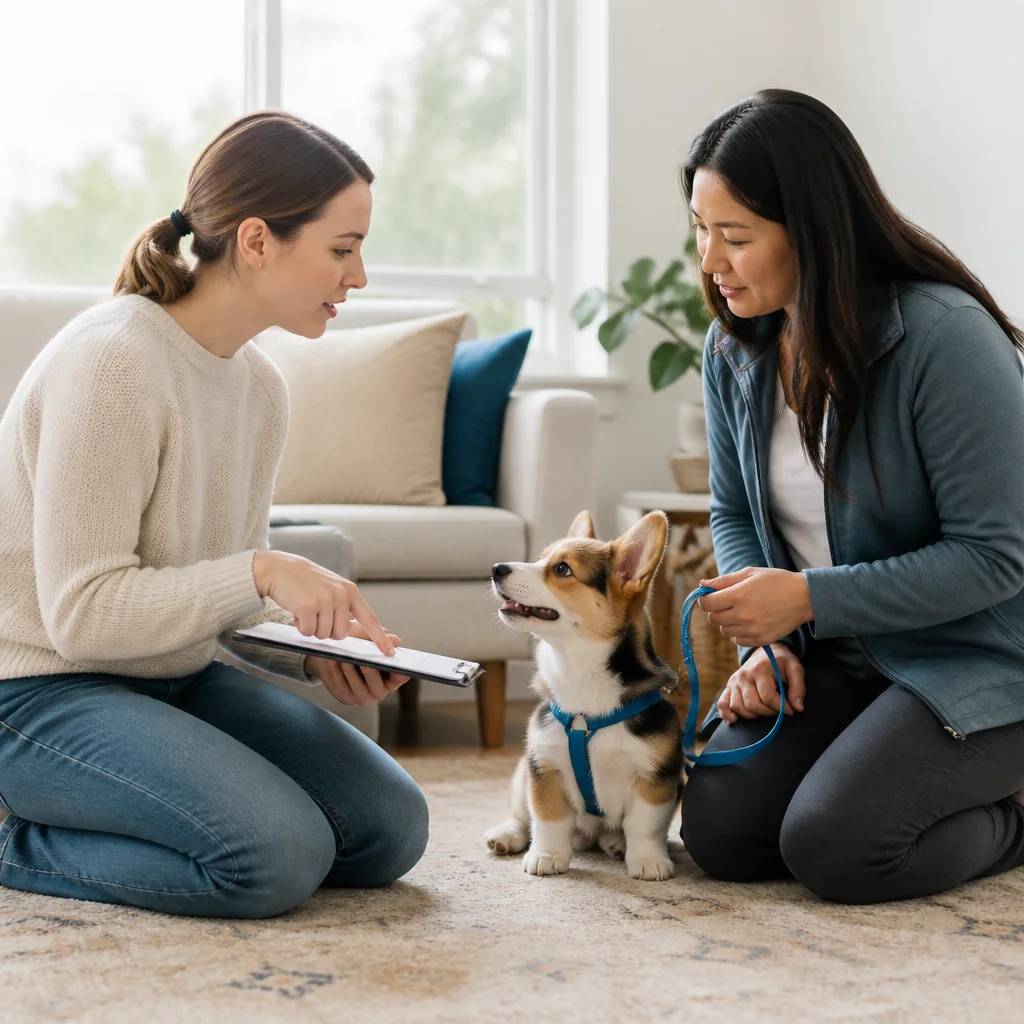
Tell the trainer about the puppy’s sleep and meal rhythm, reactions to handling, people, dogs, traffic and new surfaces, plus any illness or safety concern. Choose one goal such as calm handling, settling on a mat or responding to a name around mild distraction.
The day before
Confirm the Langley address, entrance, parking, class length and whether the lesson is indoors. Ask how puppies enter without crowding and whether family members may attend.
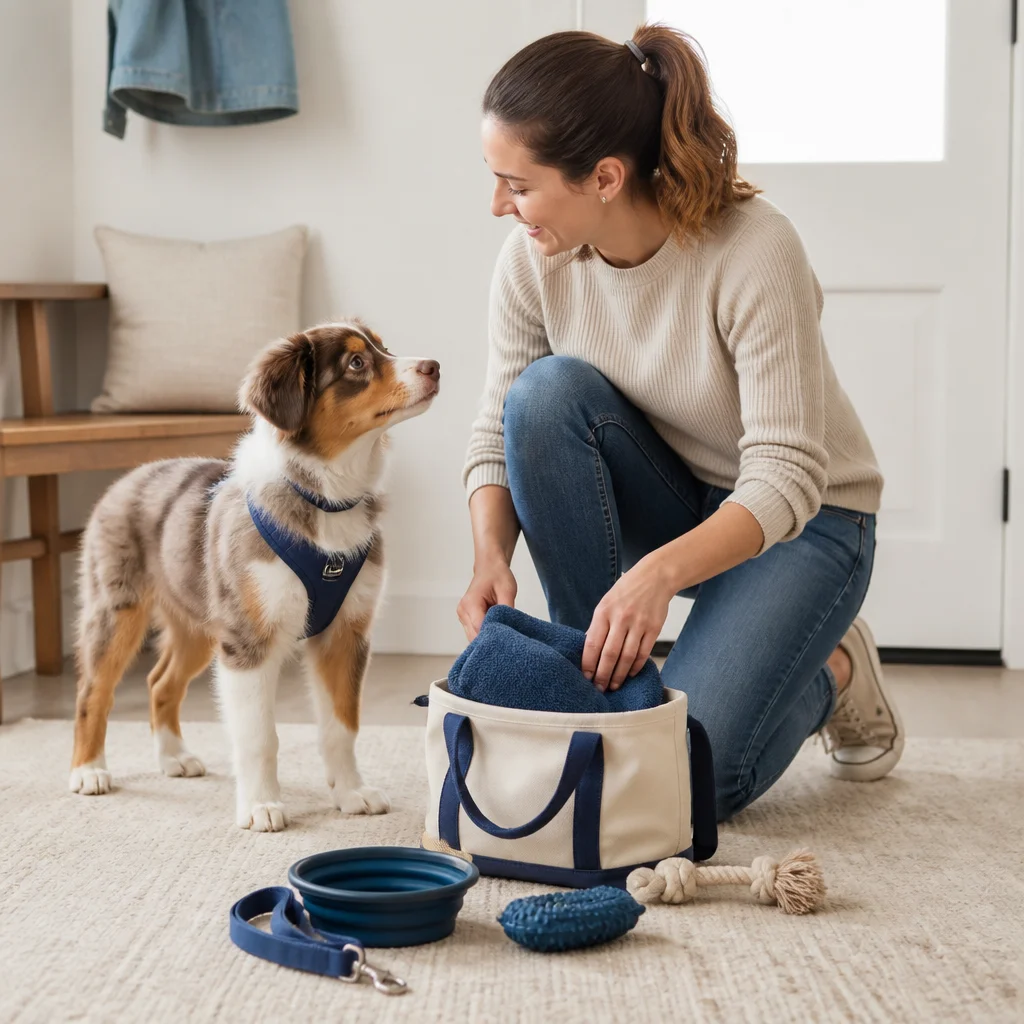
Pack what the business requests, usually some combination of:
- a secure harness or flat collar and regular leash;
- many small familiar rewards;
- water, waste bags and a mat;
- the required record or confirmation; and
- weather protection for an outdoor arrival or lesson.
Do not buy an aversive collar because it appears on a generic supply list. The BC SPCA recommends reward-based trainers and warns against shock, prong and choke collars.
On the day
Protect the puppy’s normal rest rather than adding errands before class. Arrive early enough for a toilet break, but prevent unplanned greetings in the parking area. Tell the instructor if the journey has left the puppy frightened, carsick or overtired.
Before leaving, write down the exercise, where to practise it, the sign to make it easier and the contact method for questions. The BC SPCA’s socialization guidance emphasizes good experiences and a safe place to withdraw; completing every activity is less important than preserving that quality.
Use Langley listings and training services to find a class, then use the provider’s own list for final packing.
After the first class
Give the puppy a quiet trip home and normal sleep. Later, reduce your notes to one tiny exercise you can perform correctly. For example: say the puppy’s name once in a quiet room, mark the moment they turn, then deliver the reward. Record what made it easy and stop before attention fades.
If the class introduced five skills, resist drilling all five that night. Ask the instructor which one has priority and how to fit it into daily life. Put the next class in the calendar immediately, including travel time, and save the absence contact. This turns the packing checklist into an actual week of learning rather than a bag of equipment waiting by the door.