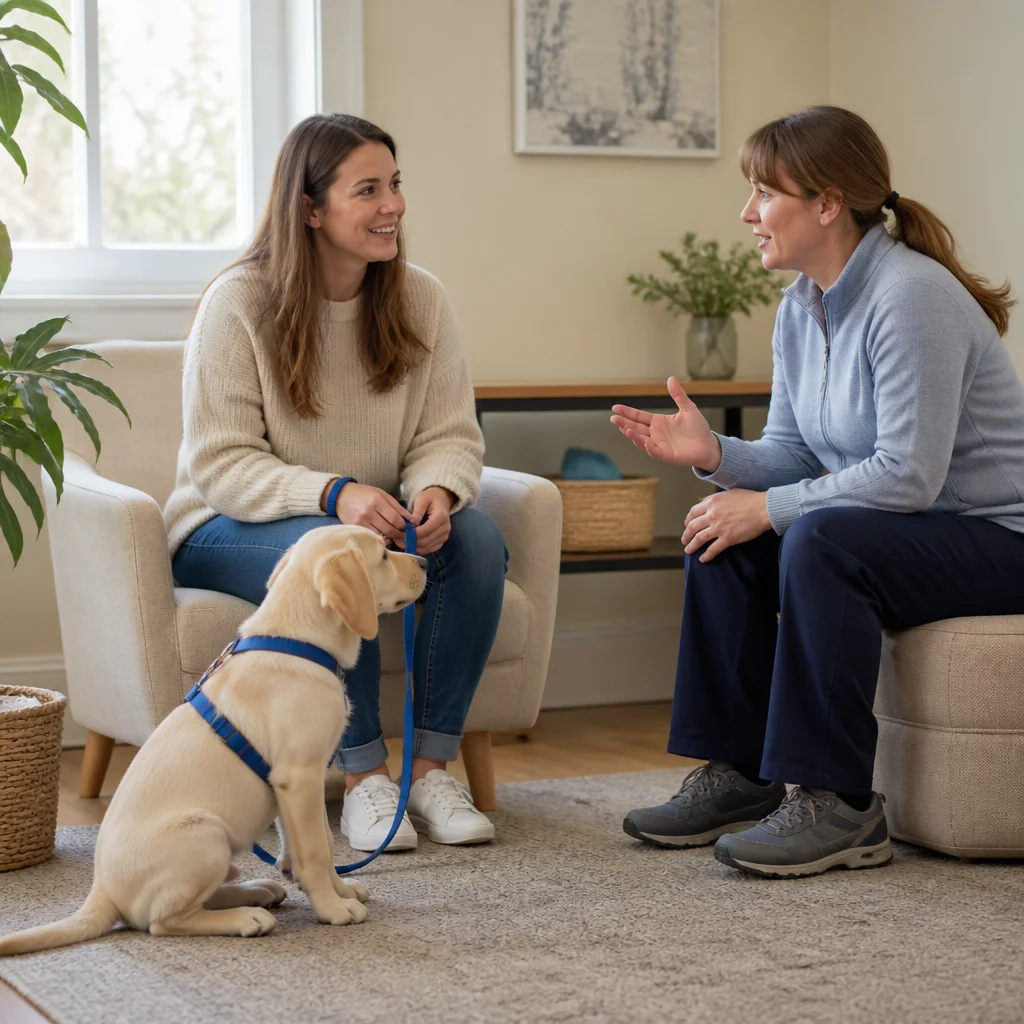
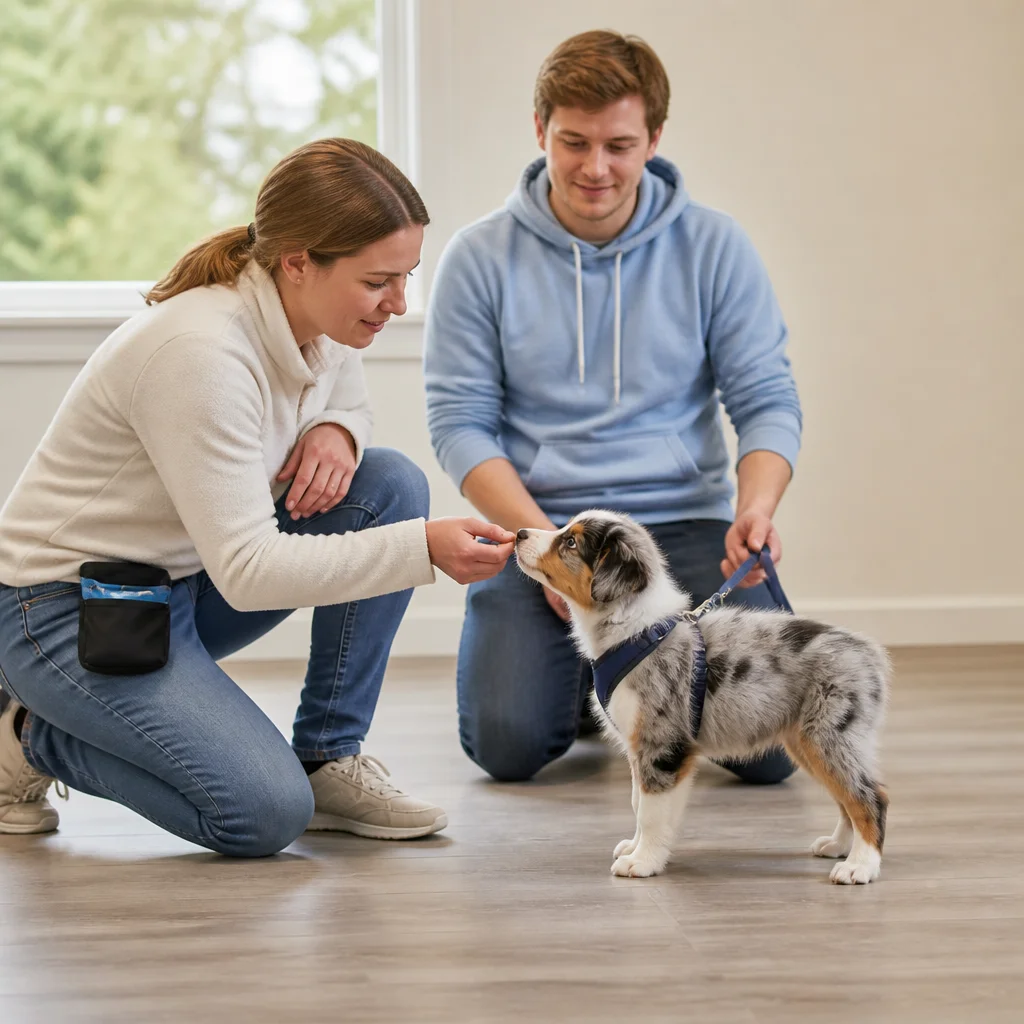
Choose puppy training by watching what happens when a puppy does not want to participate. A good program lowers the difficulty, creates distance and helps the handler reward a manageable step. It does not force greetings or use fear to produce quick compliance.
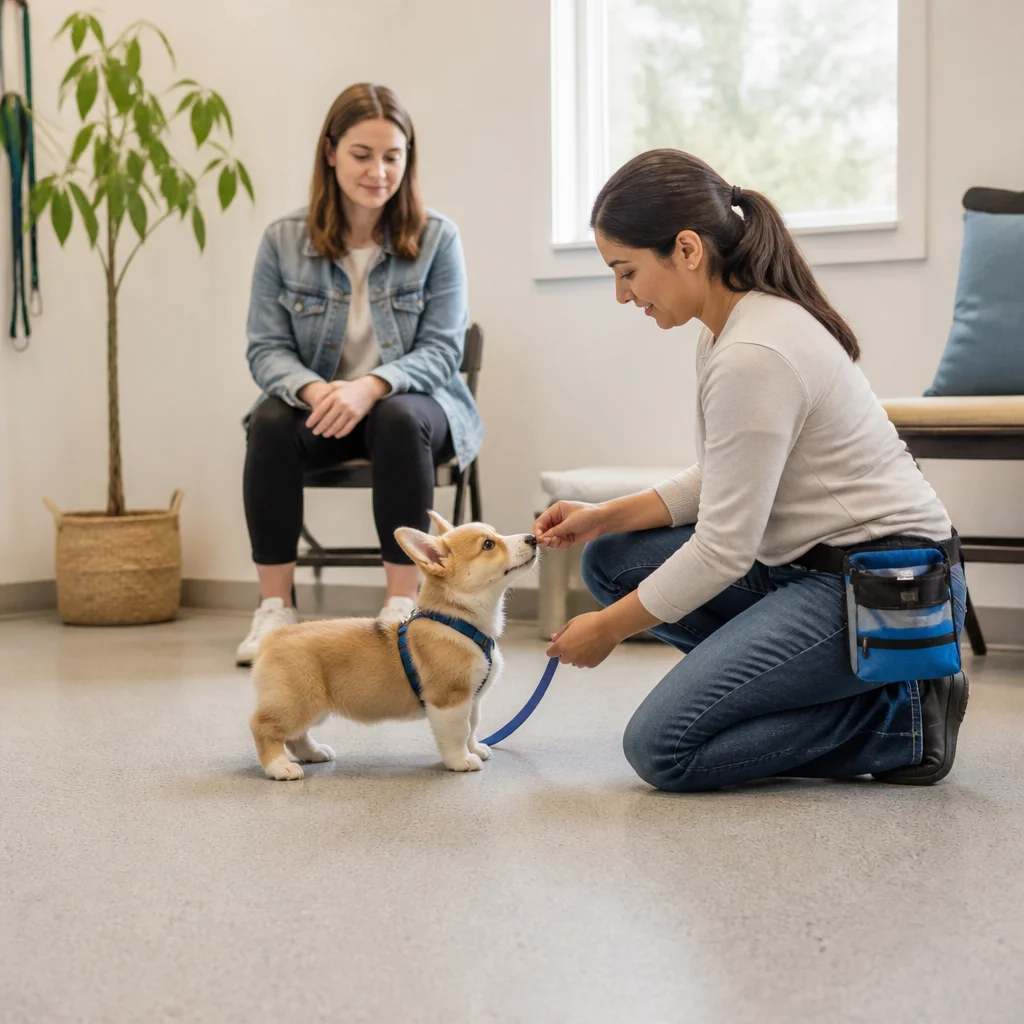
Look beyond the curriculum list
Sit, recall and leash skills matter, but ask how the class handles arrival, rest, play and worried puppies. The BC SPCA describes puppy socialization as positive experience with people, animals, sounds, environments and handling. More exposure is not automatically better.
Ask whether play is optional, how puppies are matched, where one can retreat and what instructors do when a puppy hides or stops taking food. Find out how many puppies and instructors attend and who teaches your dates.
Screen the method
Ask for a plain-language example: “If my puppy bites the leash during an exercise, what would you do?” Listen for management, redirection and reinforcement. The BC SPCA recommends humane, reward-based trainers and warns against aversive equipment, dominance framing and guaranteed results.
The program should teach you. Ask how much time handlers practise, what homework looks like and how questions between classes are handled. A polished demonstration is little use if you cannot reproduce it at home.
Check the practical fit
Get the exact Langley venue and test the trip at class time. A course that overlaps the puppy’s usual sleep period may be harder than a weekend option. Ask about missed classes, health-related absence, remote makeups and what happens if group class proves unsuitable after the first meeting.
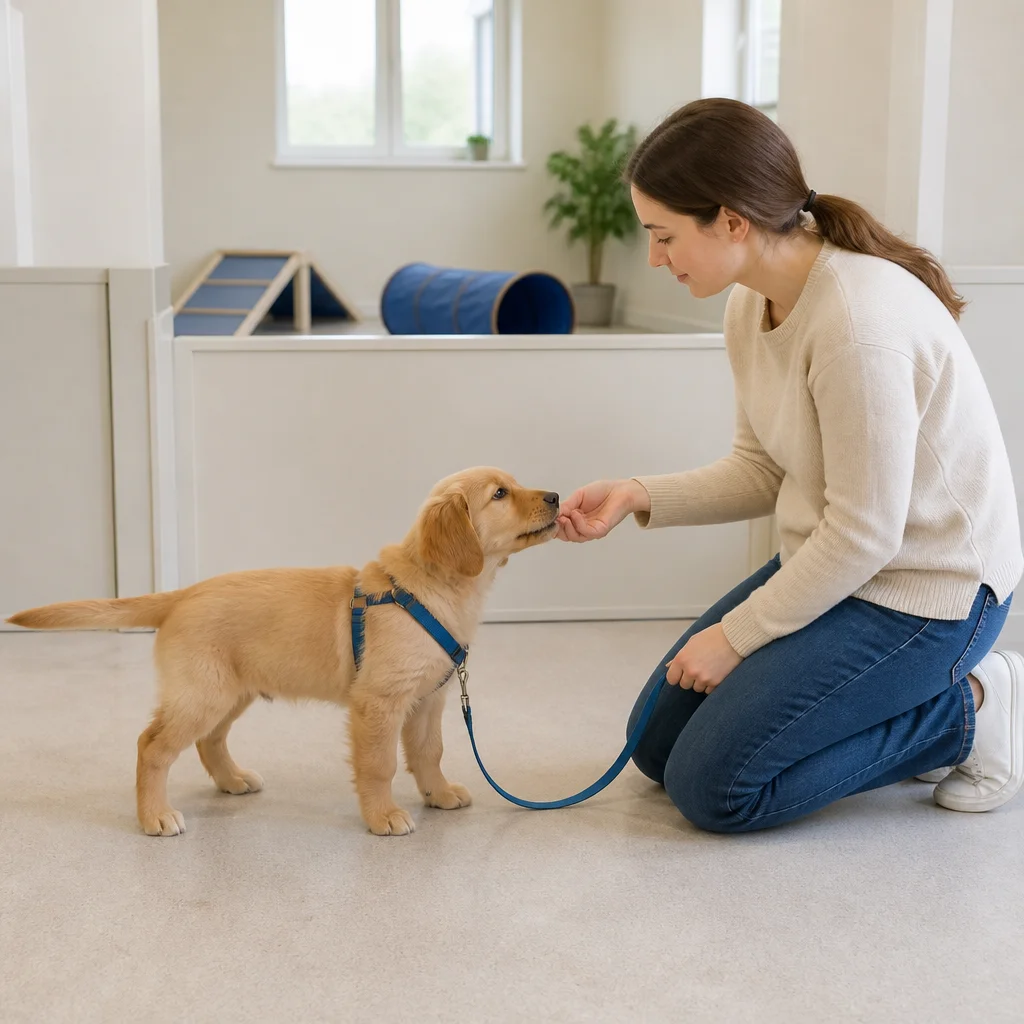
Start with the smallest commitment available. Compare Langley providers and training listings, then choose the program whose answers protect learning quality rather than simply promising a “socialized puppy.”
Compare two plausible programs
Program A offers six busy group classes near home, supervised play and no contact between sessions. Program B offers four smaller classes a longer drive away, no required play and short video feedback on homework. A social puppy whose handler mainly needs practice around distraction may benefit from A. A puppy who hangs back from play, or a first-time handler who needs timing feedback, may get more from B.
Now test the weak point of each option. Ask A how a puppy opts out and how much coaching each family receives. Ask B whether the longer trip and smaller number of sessions still allow enough repetition. The better choice is the one whose limitation you can live with, not the one with the longest list of promised skills.
If neither fits, a private home lesson can establish sleep, confinement and biting routines before you revisit group class. Choosing later is better than enrolling a puppy in a setting that cannot be adapted.