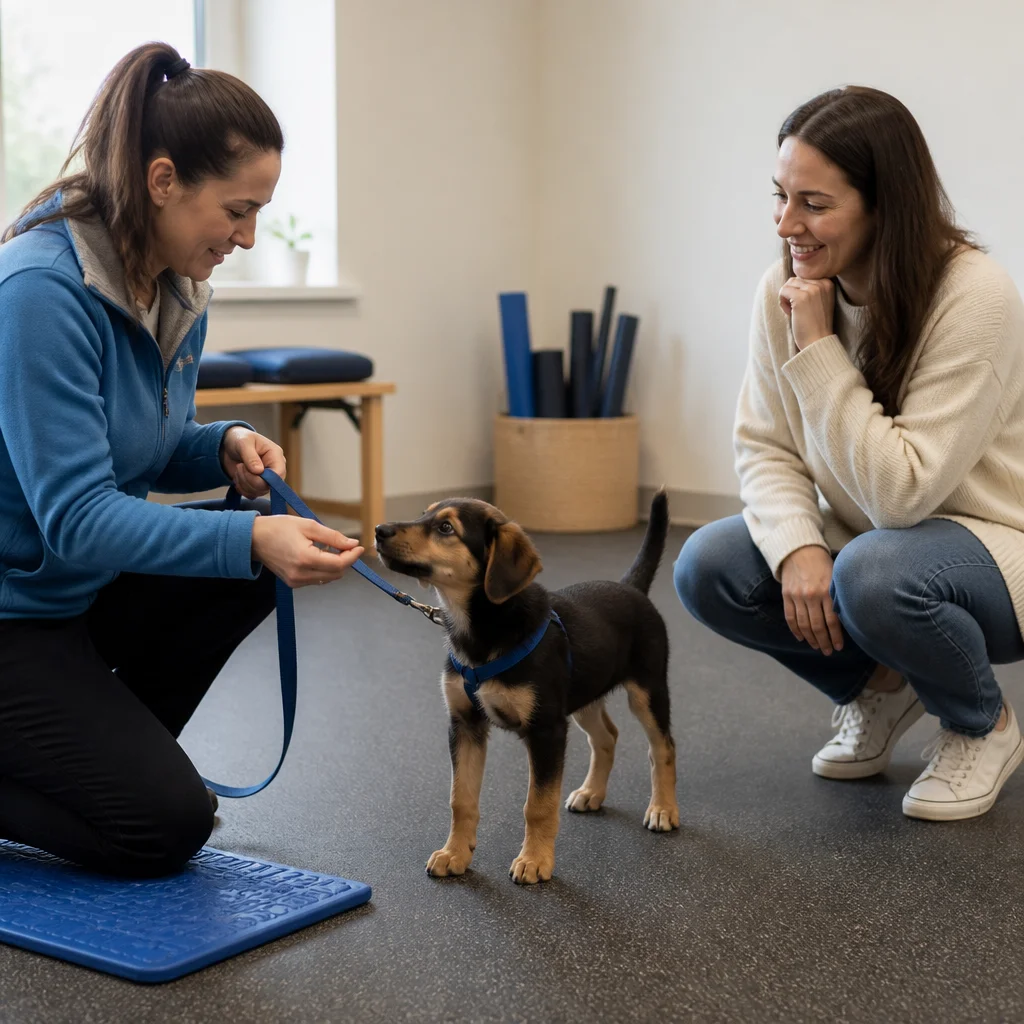

A puppy class is useful when the room creates calm, positive experiences—not simply because several puppies are present. Private and home lessons trade that built-in social setting for closer coaching and more control. The right choice depends on what your puppy can handle today and what you need to learn.
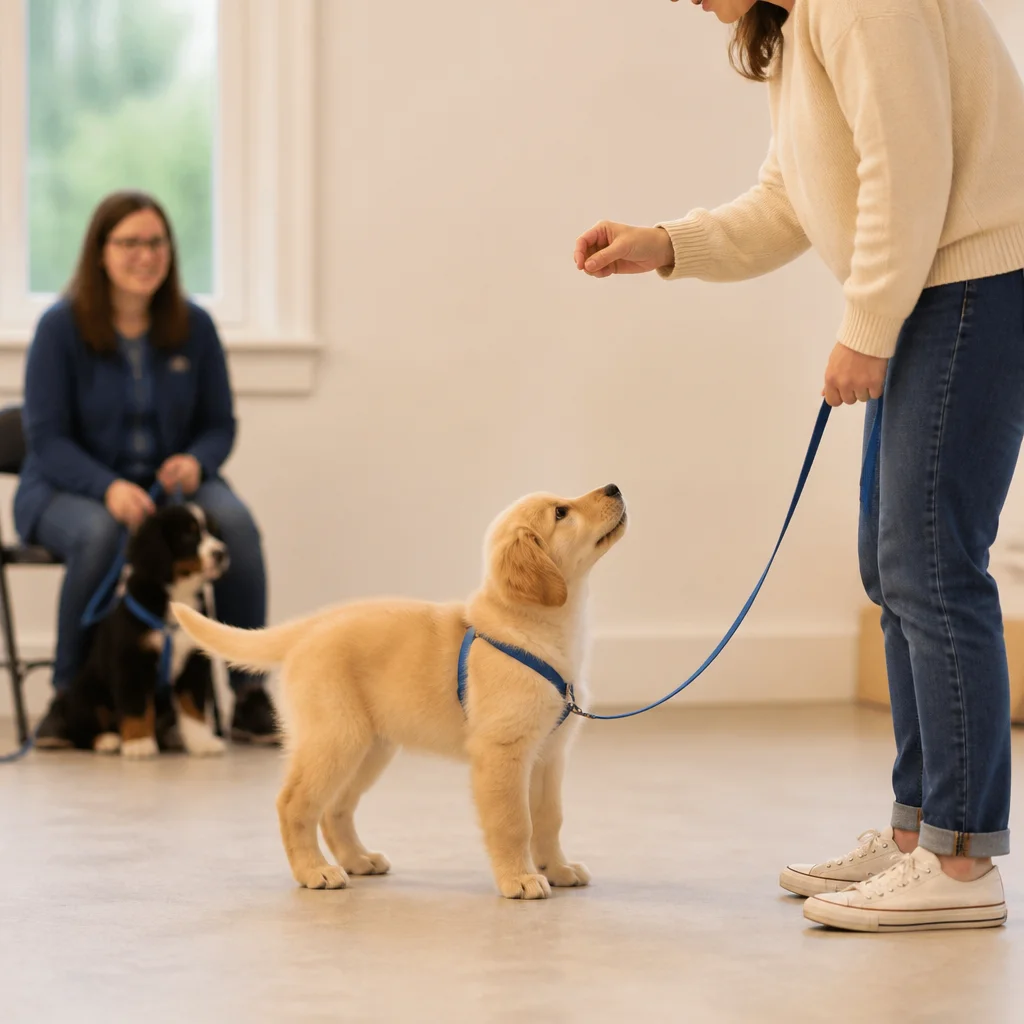
Group class: planned exposure with other learners
A well-run puppy class lets your puppy notice people, dogs, sounds and surfaces at a manageable distance while you learn handling and reinforcement. It can be especially useful if your household has few safe opportunities to practise around other puppies.
Ask to see how the room is arranged. Puppies should have space to disengage and rest; greetings and play should not be compulsory. Find out how instructors separate puppies by size, play style or comfort, and what they do when a puppy hides, freezes, barks or stops eating.
The BC SPCA’s socialization guidance describes socialization as positive experience, not maximum exposure. A puppy who spends the hour overwhelmed is not getting extra value from a busy room. The BC SPCA also advises discussing class attendance with a veterinarian when a puppy is unwell.
Group class gives each family less individual coaching. Before enrolling, ask how many puppies and instructors attend, whether the same instructor teaches the series and how questions about your home routine are handled.
Private lesson: focused teaching in a controlled setup
A private lesson can suit a puppy who needs more space, a handler who wants slower instruction or a household with one urgent routine to solve. At a trainer’s venue, distractions can be introduced deliberately. You should still do much of the practice; watching a trainer succeed with the puppy does not teach you how to reproduce the result.
Private coaching does not automatically provide useful socialization. Ask how the trainer will help you plan safe, positive exposure between lessons rather than arranging uncontrolled greetings during the paid hour.
Home visit: work where daily problems happen
Home coaching reveals the real layout: the apartment corridor, front step, food-preparation area or route to the yard. It can be the clearest choice for settling, confinement, handling, door manners or a first walking routine. It also avoids a Langley drive during a puppy’s usual sleep period.
The trade-off is that the trainer cannot bring every future situation into your living room. A good home plan tells you how to make an exercise gradually harder and where to practise next.

Remote coaching: useful when observation matters more than proximity
Video works well for reviewing short clips, changing a household setup and coaching the person’s timing. It can make instructions accessible and removes travel. It works poorly if you cannot position the camera safely or if the situation should not be recreated without someone present.
Ask what the trainer needs to see, whether clips can be submitted in advance and when they would recommend moving to an in-person lesson.
Compare the same ordinary Tuesday
Suppose an evening group class requires a 30-minute drive each way and begins when your puppy normally sleeps. The curriculum may be excellent, but the puppy could arrive overtired. A home visit costs more per hour but occurs during an alert period and targets the biting-and-settling routine that is disrupting the household. Alternatively, a weekend class might provide the group exposure without fighting the puppy’s daily rhythm.
For each option, write down:
- the puppy’s likely state at that time of day;
- how much active practice and rest the session allows;
- what you will learn to do yourself;
- travel and missed-session rules;
- opportunities for positive exposure; and
- the smallest commitment available.
Then compare the full cost of each Langley puppy-training format, including travel and missed-session rules.
Across every format, use the same method screen. The BC SPCA recommends reward-based trainers who teach guardians and avoid fear, pain, aversive collars and guaranteed results.
Browse Langley training providers and the training category, then ask each business to explain why its format fits your puppy—not why the format is universally best.